


- 1. The “wrong transfer” trick
- 2. Fake customer care calls
- 3. The “you've won a promo” message
- 4. “Double your money” investment schemes
Mobile money has made sending, saving and receiving money easier than ever. But the same convenience that makes MoMo so popular also makes it a target. The good news: most mobile money scams don't involve hacking at all. They rely on tricking you into acting fast. Learn the patterns below and you'll spot most scams before they cost you a pesewa.
1. The “wrong transfer” trick
You receive an SMS that looks like a mobile money credit alert, followed by a call or message from someone saying they sent the money to you by mistake. They sound desperate and ask you to send it back. In reality, no money arrived. The SMS was a fake, often sent from an ordinary phone number.
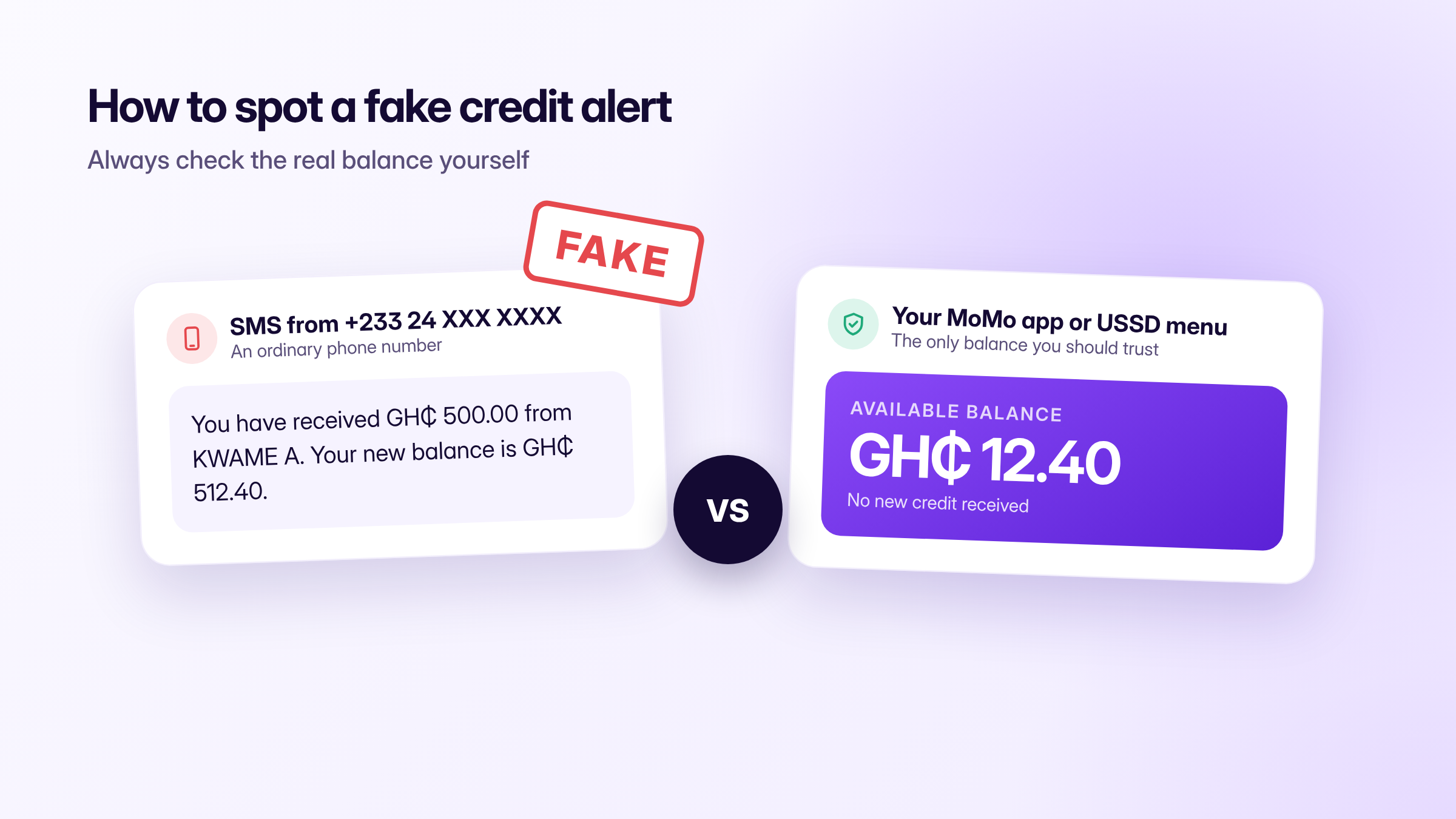
• Always check your actual balance in your mobile money app or through the official USSD menu but don't do that instantly since that can give them access to initiate a trransaction. You can wait for some time and later do that confirmation, preferrably , use the momo app.
• Never trust a credit alert SMS on its own, especially one from a regular phone number.
• If a genuine wrong transfer happened, tell the person to contact your network provider to handle the reversal.
2. Fake customer care calls
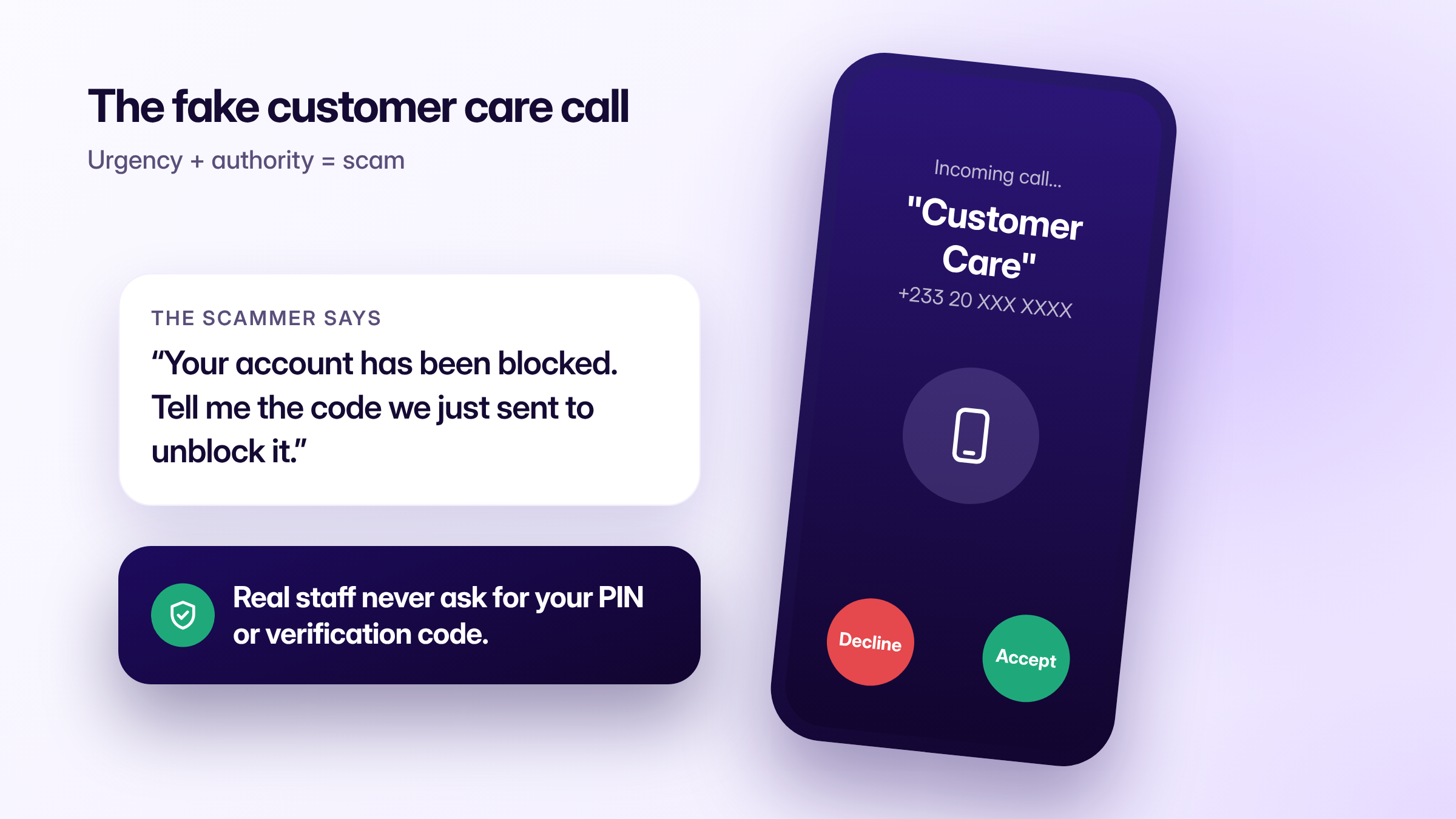
A caller claims to be from your network, your bank or a mobile money agent. They say your account has a problem, has been blocked or needs updating, and ask for your PIN or a verification code sent to your phone to “fix” it.
• Genuine staff will never ask for your PIN or a one-time code.
• Hang up and call your provider's official customer service line yourself.
• Be wary of urgency. “Do it now or your account will be closed” is a classic pressure tactic.
3. The “you've won a promo” message
You get a message or call congratulating you on winning cash, airtime or a new phone in a promotion. To claim the prize, you're asked to pay a small “processing fee”, approve a payment prompt or share a code.
• If you didn't enter a promotion, you didn't win one.
• A real prize never requires you to pay to receive it.
• Check any promotion on the company's official website or social media pages.
4. “Double your money” investment schemes
Groups on WhatsApp, Telegram and other platforms promise extraordinary returns: invest GH₵200 today and receive GH₵600 next week. Early members may even get paid, using money from newer members, which makes the scheme look real until it collapses and the organisers disappear.
• Guaranteed high returns are the biggest red flag in finance.
• Be suspicious of pressure to recruit friends and family.
• Before investing, check whether the business is licensed by the relevant regulator.
5. SIM swap fraud
Your phone suddenly loses network for no clear reason. In a SIM swap, a fraudster convinces someone to move your phone number onto a new SIM card they control. With your number, they can receive your verification codes and try to access your mobile money wallet.
• If you lose network unexpectedly, contact your network provider immediately from another phone.
• Protect your personal details, such as your Ghana Card number and date of birth, which can be used to impersonate you.
• Set a strong PIN and never use your birthday or simple sequences like 1234.
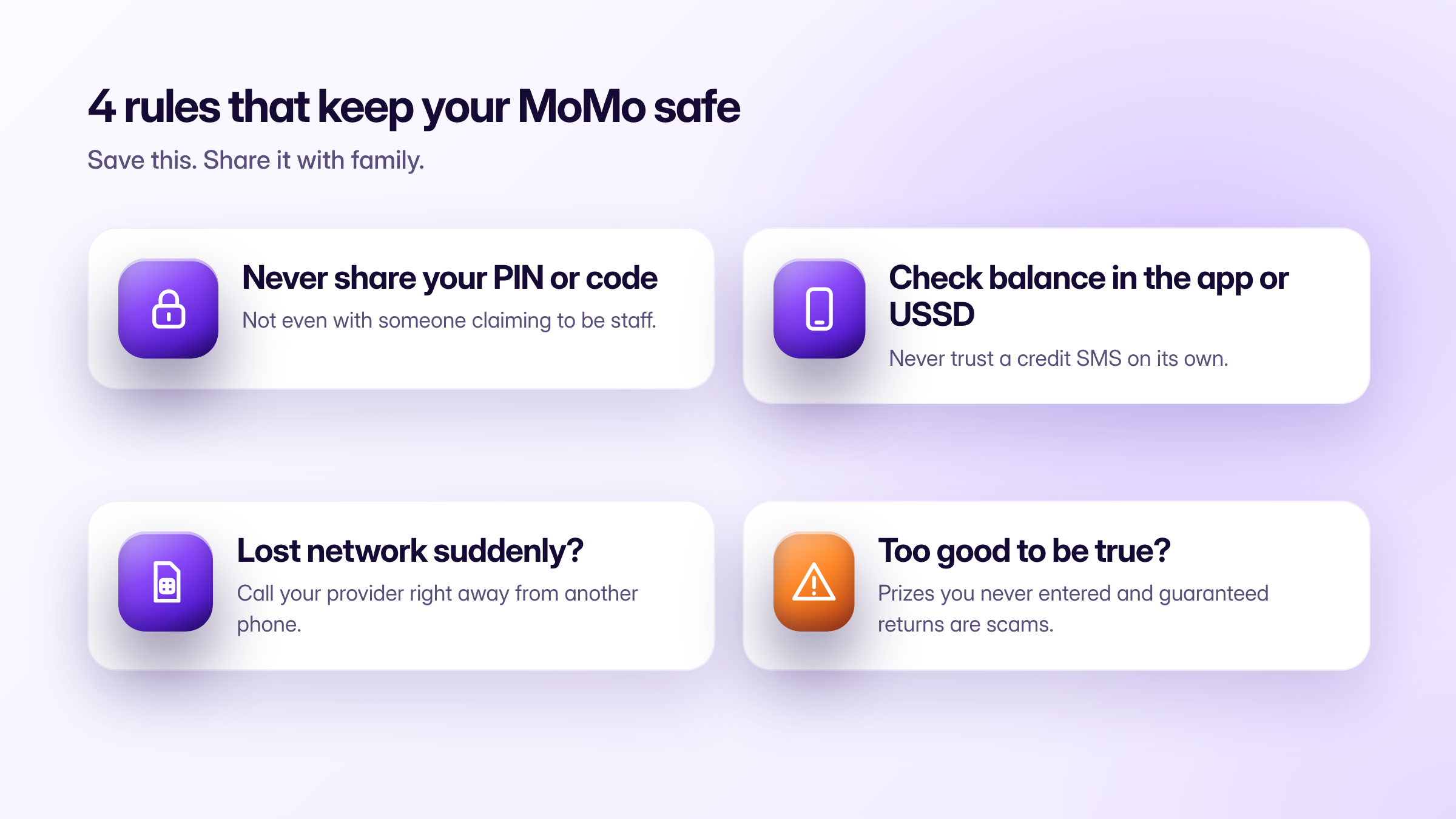
Four rules to remember
• Never share your PIN or verification code with anyone.
• Check your balance in the app or USSD menu, not through an SMS.
• If you lose network suddenly, call your provider right away.
• If it sounds too good to be true, it is.
What to do if you've been scammed
Act fast. Contact your network provider's official customer service immediately and give them the details of the transaction, including the number involved and the time. You can also report the incident to the police. The quicker you report it, the better the chance of stopping or tracing the transfer.
Share this guide with family and friends, especially older relatives who may be less familiar with these tricks. A two-minute read could save someone their savings.
Newsletter
Enjoying this article?
Get the best African tech stories delivered weekly. No spam.

Written by
Theophilus AmankwahI've always wanted to be part of Technology, the options were either I watch it happen or be part of it and so I couldn't settle for less!
What did you think of this article?