
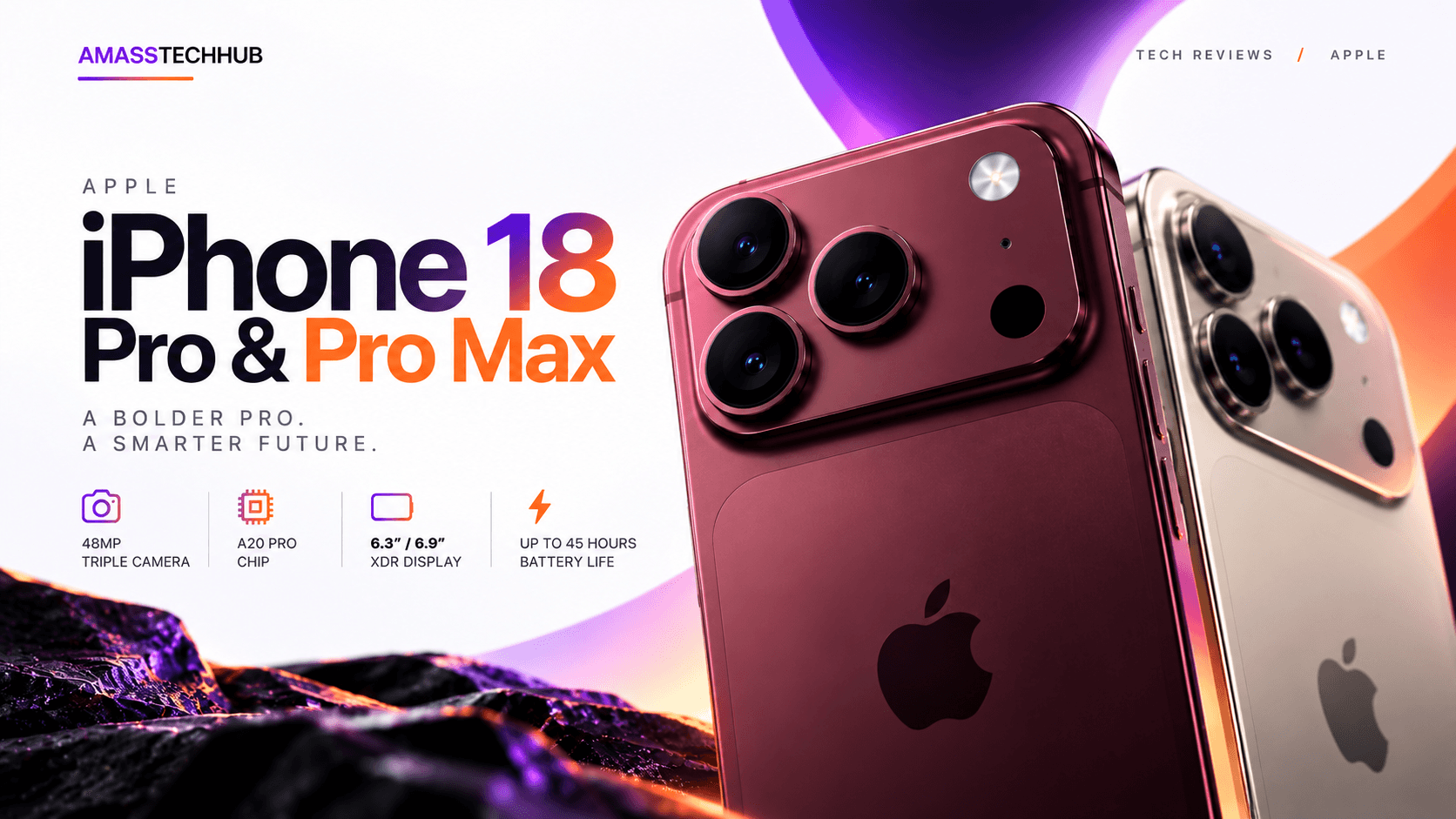

Apple has done something unusual with the iPhone 18 generation.
Instead of launching the entire iPhone 18 family together, Apple has started the generation with the iPhone 18 Pro and iPhone 18 Pro Max, while the standard iPhone 18 is expected later. That makes the Pro models the face of Apple’s 2026 iPhone lineup for now.
And at first glance, the iPhone 18 Pro does not look dramatically different from last year's iPhone 17 Pro.
That is actually the point.
Apple has concentrated this generation on the areas that matter most when you use a phone every day: camera control, sustained performance, battery life, thermals, display visibility and AI.
But does that make the iPhone 18 Pro a worthwhile upgrade?
After examining Apple's specifications and the early independent reviews, the answer is more complicated than simply calling it "the best iPhone ever."
Here is the honest review.
The iPhone 18 Pro lineup
There are currently two Pro models:
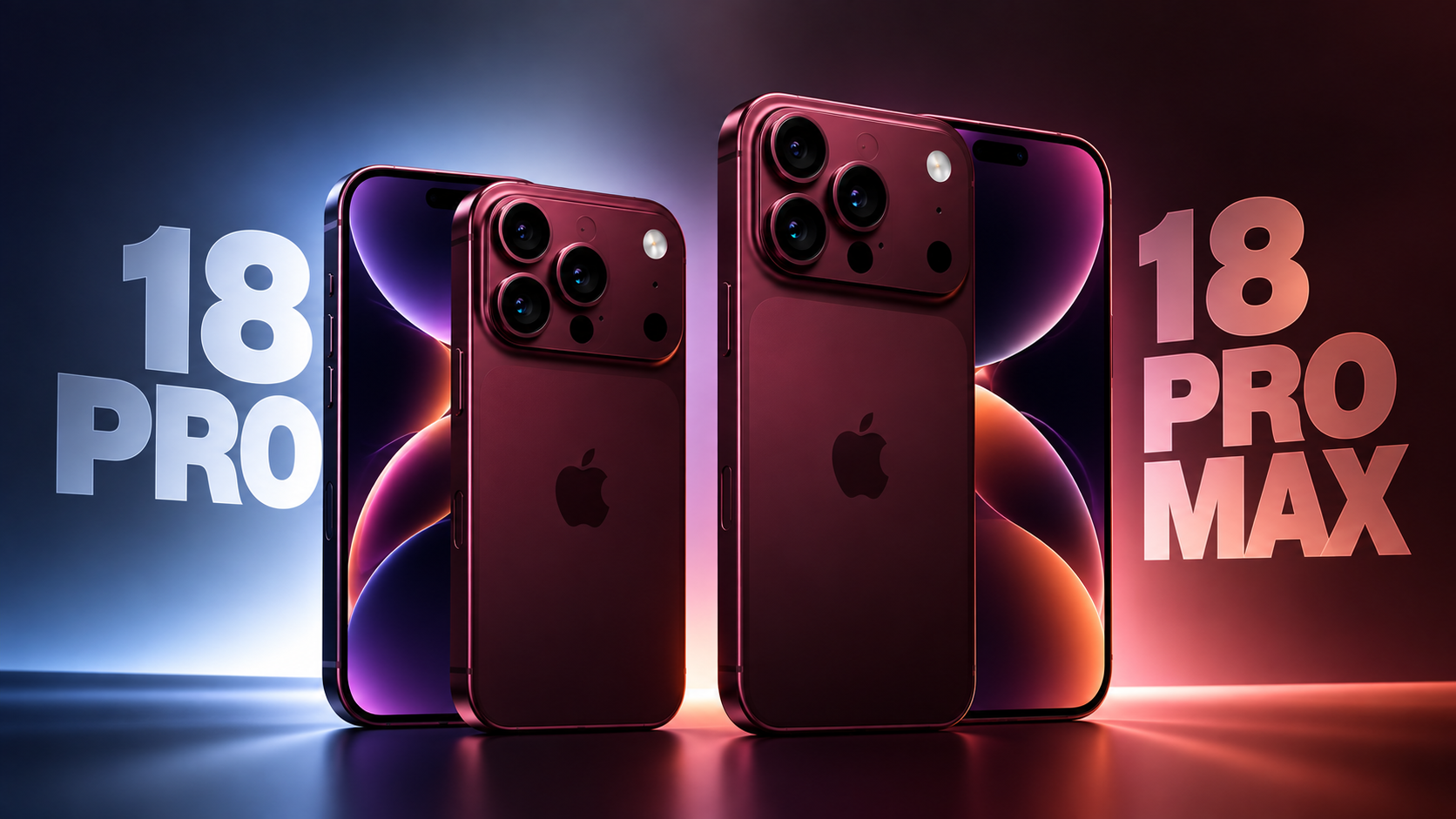
iPhone 18 Pro
iPhone 18 Pro Max
The iPhone 18 Pro comes with a 6.3-inch display, while the Pro Max gets a 6.9-inch display. Both models use Apple's A20 Pro chip, the same 48MP rear-camera system, the same core software experience and the same four colour options: Black, Silver, Glacier and Burgundy.
The biggest differences between them are therefore size, weight and battery capacity.
The iPhone 18 Pro weighs 211 grams, while the 18 Pro Max weighs 249 grams. That makes the Pro Max a seriously large and heavy smartphone, particularly if you are coming from a smaller iPhone.
And yes, the Pro Max is still the battery champion.
But we'll get to that.
Design: Familiar, but refined
If you were expecting Apple to completely redesign the iPhone 18 Pro, this is not that phone.
The overall design language remains very close to the iPhone 17 Pro generation. Apple continues with an aluminium unibody construction, Ceramic Shield 2 on the front and Ceramic Shield on the back.
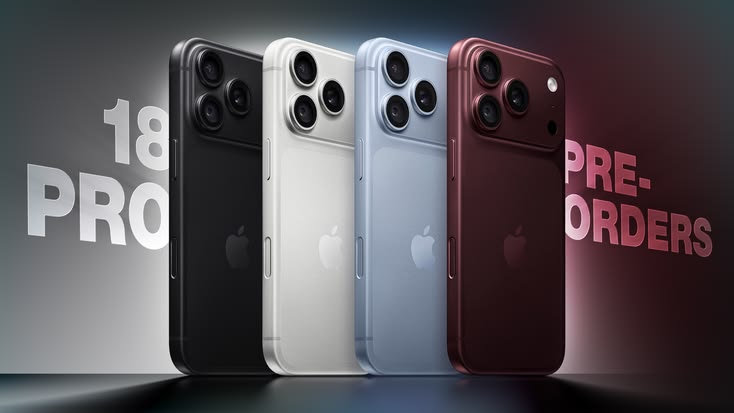
There are four finishes:
Black, Silver, Glacier and Burgundy.
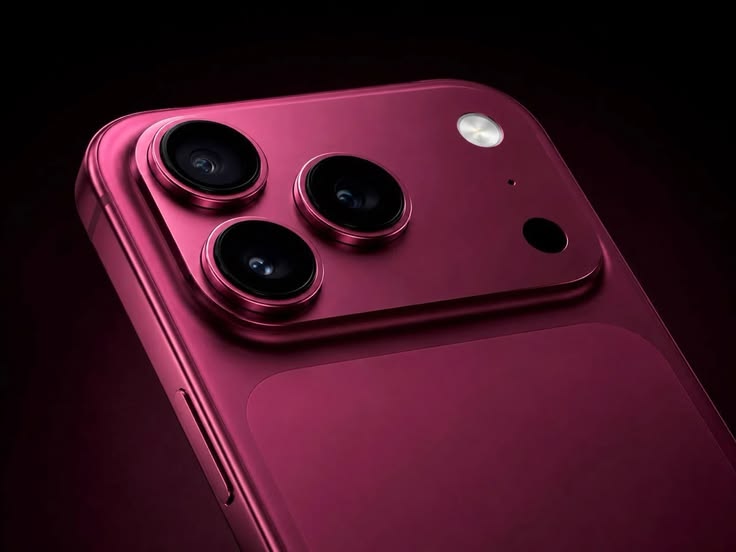
Burgundy is arguably the colour that gives the new generation the strongest visual identity.
But the more interesting change is at the front.
Apple has made the Dynamic Island smaller.
It is not gone, and Apple has not delivered the completely interruption-free display that some users have been waiting for. However, the reduction makes the display feel cleaner and gives Apple a little more room to push the edge-to-edge experience.
The phones also retain IP68 water and dust resistance.
The honest take
The iPhone 18 Pro looks premium. There is very little to complain about regarding construction.
But visually, this is not a generation-defining redesign.
If you put an iPhone 17 Pro and an iPhone 18 Pro next to each other, most people will not immediately know which is which.
That isn't necessarily bad.
Apple appears to be spending this generation improving what happens inside the phone rather than trying to reinvent the exterior.
The display is still excellent
The iPhone 18 Pro has a 6.3-inch Super Retina XDR OLED display with ProMotion and adaptive refresh rates up to 120Hz.
The Pro Max increases that to 6.9 inches.
Both displays can reach up to 3,000 nits outdoors, with a minimum brightness of just 1 nit. Apple has also added an anti-reflective coating to improve outdoor visibility.
And this is one of those upgrades that can be more useful than it sounds on paper.
A smartphone display isn't only about resolution.
If you spend a lot of time outside, especially under direct Ghanaian sunlight, being able to see your screen more clearly can make a meaningful difference.
The 120Hz ProMotion display also continues to make scrolling, gaming and animations feel extremely smooth.
But here's the catch
If you're coming from an iPhone 17 Pro, the display experience isn't revolutionary.
Apple is refining something that was already excellent.
If you're upgrading from an older iPhone, however, the difference will be much easier to appreciate.
The biggest camera change: variable aperture
This is where things get interesting.
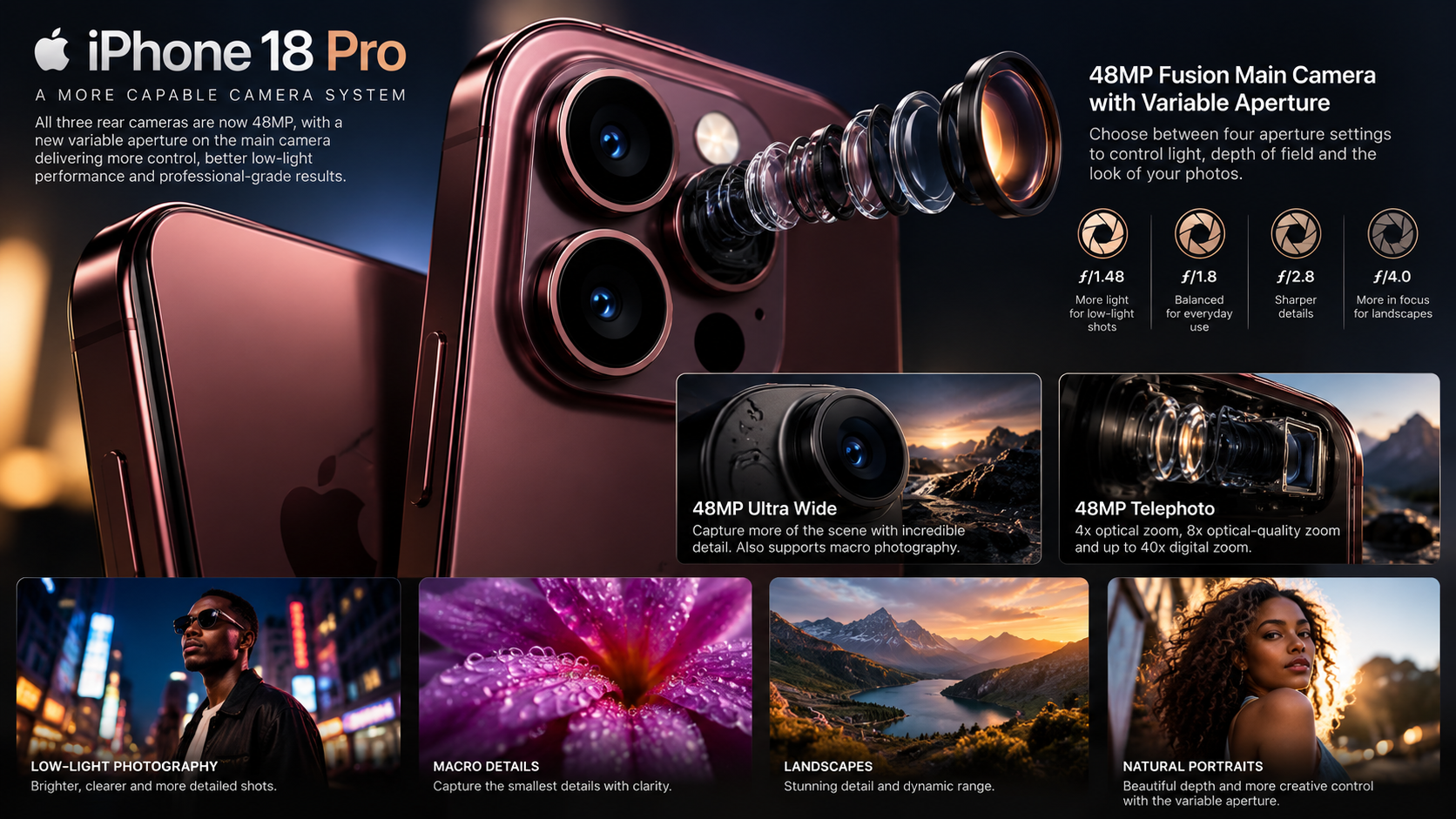
The headline camera upgrade on the iPhone 18 Pro is the new 48MP Fusion Main camera with a variable aperture.
Apple has introduced four aperture settings:
ƒ/1.48, ƒ/1.8, ƒ/2.8 and ƒ/4.0.
Why does this matter?
Traditional smartphone cameras rely heavily on computational photography to determine how an image should look.
A variable aperture gives the camera another physical control over light and depth of field.
At wider apertures, more light can reach the sensor and the background can appear more separated from the subject.
At narrower apertures, more of the scene can remain in focus.
That makes the camera behave a little more like a traditional camera.
For photographers and content creators, this is potentially one of the most meaningful camera changes Apple has made in years.
And all three rear cameras are now 48MP
The iPhone 18 Pro camera system consists of:
48MP Fusion Main with variable aperture
48MP Fusion Ultra Wide
48MP Fusion Telephoto
The telephoto camera provides 4x optical magnification and an 8x optical-quality option, with up to 40x digital zoom.
The ultra-wide camera also supports 48MP photography and macro photography.
That means Apple is moving toward a much more consistent high-resolution camera system across the rear of the phone.
For creators, that's a big deal.
It gives you more flexibility when switching between lenses without experiencing the same dramatic differences in image quality that can occur on phones with one high-resolution camera and lower-resolution secondary cameras.
Apple is finally giving creators more control
The iPhone has always been capable of producing excellent photographs.
The problem is that Apple often decides what the photograph should look like for you.
The iPhone 18 Pro changes that philosophy slightly.
The Camera app now provides Pro controls for:
Aperture
Shutter speed
White balance
Histogram
Lens selection
Photographic Styles 3 also gives users more control over texture and grain.
For someone who simply points the phone and takes a picture, these controls may not matter much.
For photographers, filmmakers and creators, they matter considerably more.
Video remains one of Apple's strongest advantages
Apple is also pushing the iPhone 18 Pro further into creator territory.
The phone supports advanced video formats including ProRes, ProRes RAW and Apple Log 2, while also introducing more flexibility around Cinematic effects.
One particularly interesting feature is the ability to apply Cinematic mode effects after recording, rather than having to commit to the effect entirely when you press record.
That is useful because it gives creators more flexibility during editing.
The new Center Stage front camera also allows the framing to adjust between portrait and landscape orientations and can automatically keep multiple people in the frame.
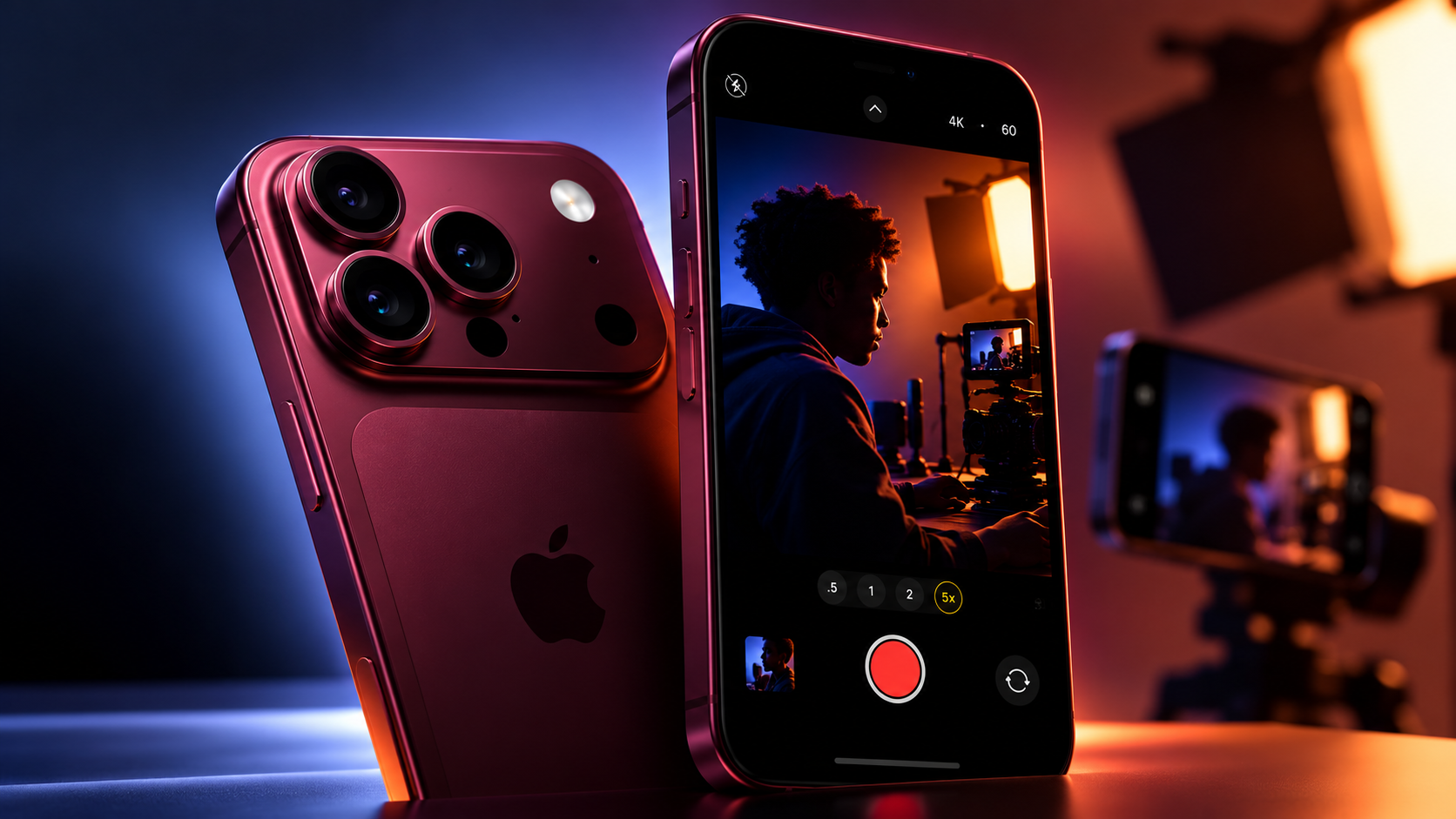
For creators who shoot social media content directly on their phones, these improvements could be more important than another increase in megapixels.
A20 Pro: Apple's real performance upgrade
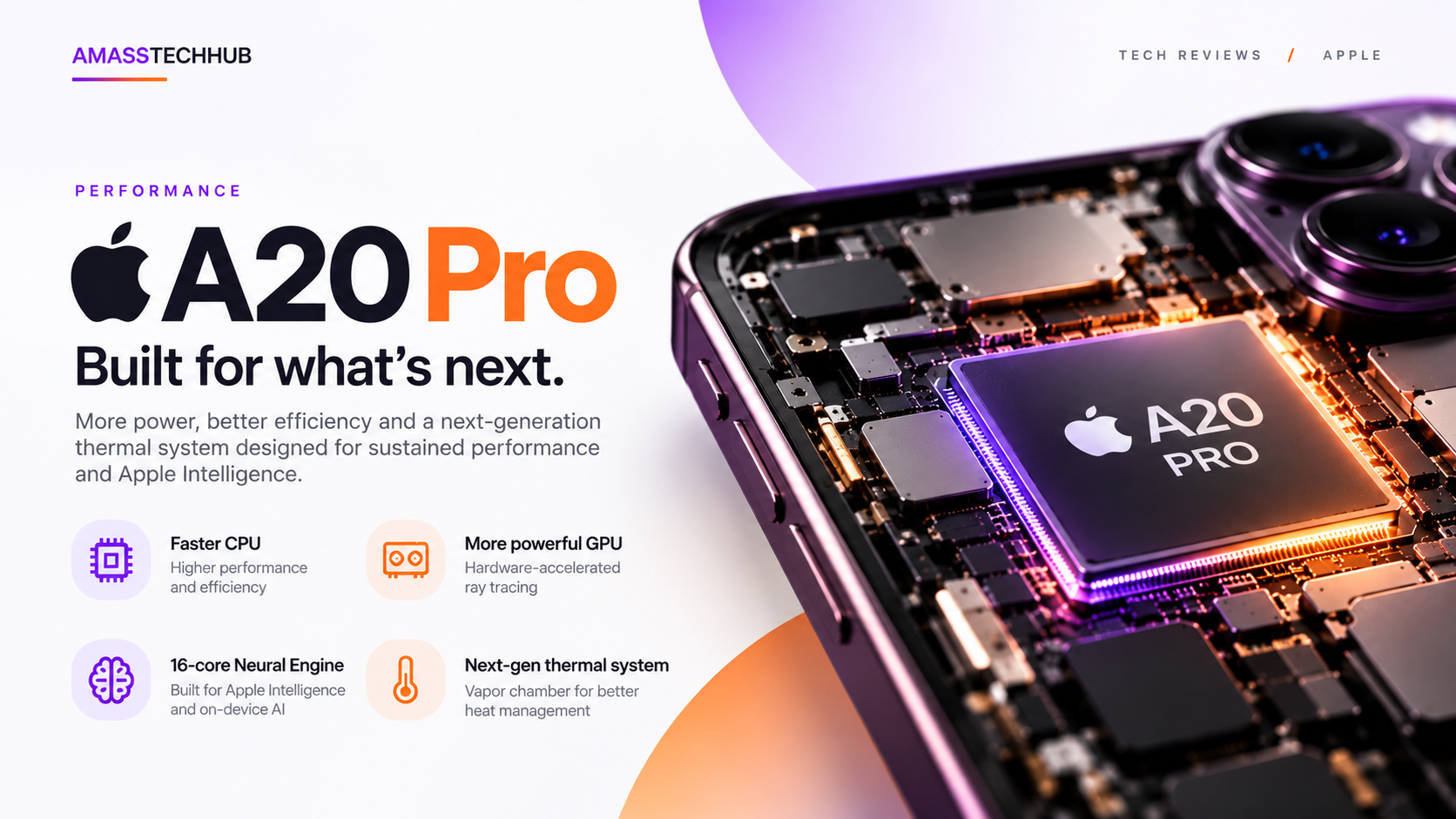
Under the hood is Apple's new A20 Pro chip.
Apple pairs it with a next-generation vapor chamber designed to improve thermal management and sustained performance. The chip also includes a dual 16-core Neural Engine and hardware-accelerated ray tracing.
This is important because smartphone performance isn't just about peak benchmark numbers.
A phone can be incredibly fast for the first few minutes of a demanding task and then slow down as it heats up.
Apple's approach with the iPhone 18 Pro is to improve sustained performance.
Independent testing has found meaningful gains, particularly in graphics performance, while reviewers have also highlighted the improved thermal behaviour.
For normal users, however, there is an important reality:
You probably won't feel the full A20 Pro upgrade every day.
Opening Instagram, WhatsApp, YouTube or Safari was already extremely fast on previous iPhones.
The difference becomes more obvious when you're:
Gaming for extended periods
Editing 4K video
Rendering demanding projects
Using AI features
Recording and processing high-resolution media
Performing sustained heavy workloads
That's where the new thermal system becomes particularly useful.
Battery life is one of the biggest wins
This is perhaps the most practical upgrade in the entire iPhone 18 Pro generation.
Apple rates the iPhone 18 Pro for up to 24 hours of video playback, while the iPhone 18 Pro Max reaches up to 45 hours of video playback.
Apple says the 18 Pro Max can provide up to six additional hours of video playback compared with the iPhone 17 Pro Max.
Independent testing also shows strong endurance, with one test putting the Pro Max at around 18.5 hours in a continuous battery test.
That is impressive.
The Pro Max is now less about simply surviving a full day and more about having enough battery headroom that heavy users don't have to constantly think about charging.
But there's a price
Weight.
At 249 grams, the Pro Max is not a lightweight phone.
If you don't need the enormous display and battery, the 18 Pro is significantly easier to live with.
Charging is faster ; but Apple still isn't winning the charging race
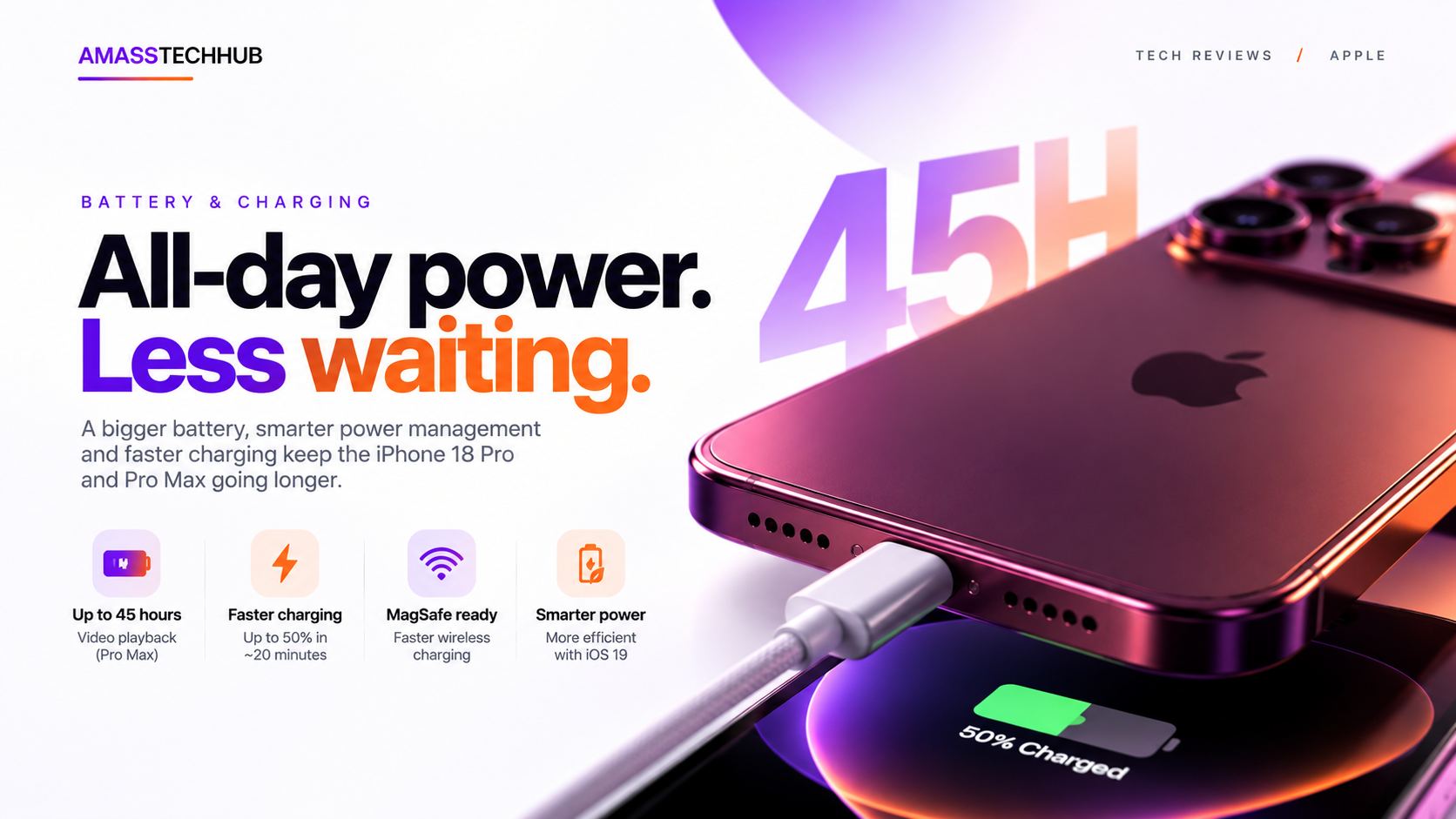
Apple has improved wired charging speeds with the iPhone 18 Pro generation.
But MagSafe and Qi2 wireless charging remain capped at 25W.
And this is where the iPhone continues to look conservative compared with some Android competitors.
The charging experience is reliable and convenient, but Apple is still not competing purely on charging speed.
For users coming from phones with extremely fast wired charging, this remains one of the areas where Apple's approach can feel behind the competition.
iOS 27 and Apple Intelligence
The iPhone 18 Pro launches with iOS 27.
And this generation is heavily tied to Apple's AI ambitions.
Apple has introduced a more capable Siri AI, designed to provide more contextual and personal assistance while working across apps.
The A20 Pro's Neural Engine is also designed to handle demanding AI workloads on the device.
But this is where we need to separate Apple's promise from the reality of the product.
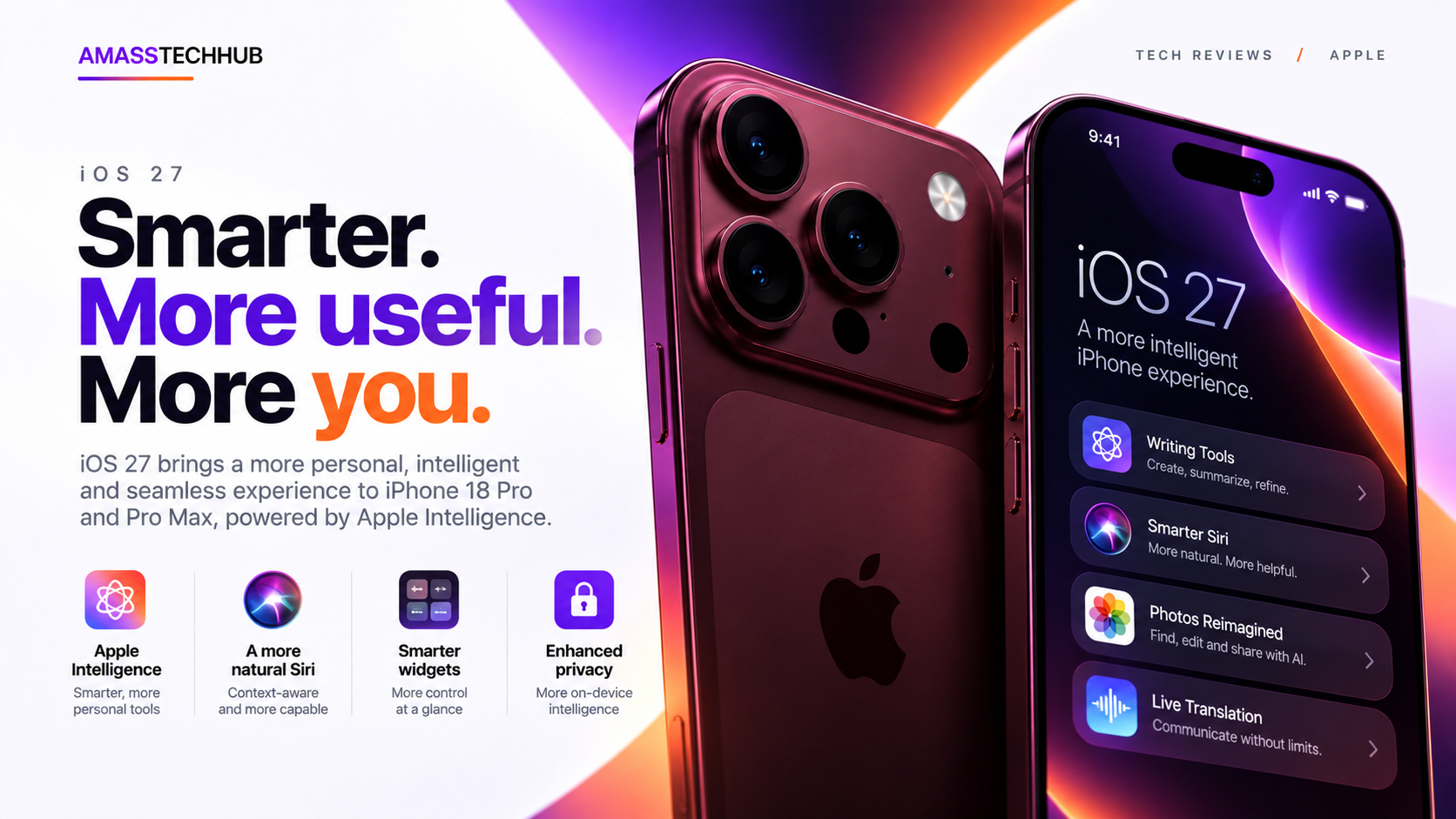
Apple Intelligence is becoming more deeply integrated into the iPhone experience, but the company's AI story still isn't as straightforward as simply saying, "Apple has solved AI."
The usefulness of many AI features depends on the task, language, region and software availability.
Apple itself notes that some features may not be available in every language or region.
So if you're buying the iPhone 18 Pro specifically because of AI, don't buy it purely based on Apple's marketing language.
Look at the features that are actually available to you.
The repairability problem
There is another side to the new camera system that Apple doesn't emphasize.
A variable-aperture camera requires moving mechanical components.
An iFixit teardown found that the new aperture mechanism uses mechanically adjustable blades, adding complexity to the camera module. The teardown also highlighted concerns about how difficult the mechanism could be to repair if it fails.
That doesn't mean the camera will fail.
It means there is now another mechanical component inside an already complex camera system.
For a device this expensive, repairability matters.
The teardown also found a mixed repairability picture overall, with some improvements such as easier battery access but continued challenges around components including the screen and USB-C port.
Storage finally goes up to 2TB
Apple now offers the iPhone 18 Pro and Pro Max with:
256GB
512GB
1TB
2TB
The 2TB option is particularly interesting for creators who shoot large amounts of ProRes or high-resolution footage.
But there is an obvious question:
Do you need 2TB?
For most people, absolutely not.
For professional filmmakers and creators who want to use the iPhone as a serious production camera, however, it could make considerably more sense.
iPhone 18 Pro vs iPhone 18 Pro Max
The decision between the two is actually fairly simple.
Choose the iPhone 18 Pro if:
You want a powerful Pro iPhone without carrying a 249-gram phone.
The 6.3-inch display is already large enough for most people, and you still get the same A20 Pro chip and core camera system.
Choose the iPhone 18 Pro Max if:
Battery life and screen size are your priorities.
The 6.9-inch display is better for video editing, gaming and media consumption, while the larger battery provides Apple's strongest endurance in an iPhone.
The downside is obvious:
It's big. And it's heavy.
What about the standard iPhone 18?
This is an important detail for anyone searching for "iPhone 18."
The standard iPhone 18 was not released alongside the iPhone 18 Pro and Pro Max in September 2026.
Apple has split its iPhone launch strategy, with reports pointing toward a spring 2027 launch for the standard iPhone 18 and other lower-priced models. Apple has not officially confirmed the final specifications or release date for those models.
So any article claiming to give you a definitive hands-on review of the standard iPhone 18 right now should be treated carefully.
There is no reason to pretend we know hardware that Apple hasn't officially released.
The price problem
This is where the iPhone 18 Pro becomes harder to recommend without qualification.
The iPhone 18 Pro starts at $1,199 in the United States, while the iPhone 18 Pro Max starts at $1,299. Both start with 256GB of storage.
That's a $100 increase over the equivalent iPhone 17 Pro generation.
And once you move into 512GB, 1TB or 2TB configurations, the price rises considerably.
For buyers in Ghana, the final retail price can also vary significantly depending on taxes, exchange rates, importer margins, warranty arrangements and availability.
So the U.S. starting price should not be treated as the actual Ghana retail price.
Should iPhone 17 Pro owners upgrade?
This is probably the most difficult question.
If you already own an iPhone 17 Pro or 17 Pro Max, the iPhone 18 Pro is better.
That's not really debatable.
You get:
A20 Pro
Better thermal management
Variable aperture
Improved camera controls
Longer battery life
Smaller Dynamic Island
Faster wired charging
New AI capabilities
But the question isn't whether it's better.
The question is whether the improvements justify replacing a phone that is already extremely capable.
For many iPhone 17 Pro owners, the answer may be not immediately.
Independent reviews have similarly described the iPhone 18 Pro as an iterative upgrade rather than a complete reinvention.
What about older iPhones?
This is where the iPhone 18 Pro becomes much more interesting.
If you're coming from something like an iPhone 14, 14 Pro, 13 Pro or older, the difference is much more substantial.
You'll be moving into:
120Hz ProMotion
Much brighter outdoor display
Newer camera hardware
Variable aperture
More powerful processing
Better sustained performance
Much longer battery life
USB-C
Newer AI features
Improved video capabilities
That's a considerably larger generational jump.
The iPhone 18 Pro is not perfect
Let's be honest.
There are several things Apple still hasn't completely solved.
The design is familiar.
If you wanted a phone that looks radically different, this isn't it.
Charging is still conservative.
25W wireless charging isn't exactly class-leading.
The Pro Max is heavy.
249 grams is a lot of phone to carry every day.
The price has gone up.
Starting at $1,199 makes an already expensive phone even harder to justify.
AI remains a work in progress.
Apple is clearly investing heavily in AI, but the usefulness of individual features varies depending on availability and use case.
The camera's biggest upgrade is not necessarily transformational for casual photographers.
The variable aperture is technically impressive, but someone who simply opens the Camera app and presses the shutter may not appreciate the full benefit.
But Apple got some important things very right
The iPhone 18 Pro doesn't need to reinvent the smartphone.
It needs to be an excellent smartphone.
And in several areas, Apple has done exactly that.
The A20 Pro and improved cooling make the phone better suited for sustained workloads.
The camera system gives serious creators more control.
The variable aperture brings a traditional camera concept into a smartphone in a meaningful way.
The battery improvements address one of the biggest complaints people have about smartphones.
The display remains excellent.
And Apple's video ecosystem continues to make the iPhone particularly attractive to creators who want professional-looking footage without carrying a dedicated camera everywhere.
Final verdict
The iPhone 18 Pro is a refinement-heavy flagship, not a revolution.
Apple hasn't completely redesigned the iPhone.
Instead, it has taken an already mature product and improved several of the things that matter most.
The camera is more flexible.
The processor is faster.
Thermal management is better.
Battery life is significantly stronger, particularly on the Pro Max.
The display is brighter and more usable outdoors.
And the software is becoming increasingly AI-driven.
But there's an important distinction between "the best iPhone Apple has made" and "the iPhone everyone should upgrade to."
Those are not the same thing.
If you're coming from an older iPhone, the iPhone 18 Pro represents a substantial upgrade.
If you're a creator, photographer or someone who pushes their phone hard, the new camera controls, variable aperture, A20 Pro and improved thermals are particularly compelling.
But if you're already using an iPhone 17 Pro, the story is different. The iPhone 18 Pro is better, but much of the experience will still feel familiar.
And that may be the most honest way to describe Apple's 2026 flagship:
The iPhone 18 Pro doesn't reinvent the iPhone. It makes the iPhone better at being an iPhone.
For Apple, that may be exactly the strategy.
For buyers, the question is whether those improvements are worth the price.
AmassTechHub's take: If you're upgrading from several generations back, this is a major step forward. If you're already on an iPhone 17 Pro, there is less urgency. And if you're waiting for the standard iPhone 18, the story isn't finished yet.
Newsletter
Enjoying this article?
Get the best African tech stories delivered weekly. No spam.

Written by
Theophilus AmankwahI've always wanted to be part of Technology, the options were either I watch it happen or be part of it and so I couldn't settle for less!
What did you think of this article?