

Apple has finally done it.
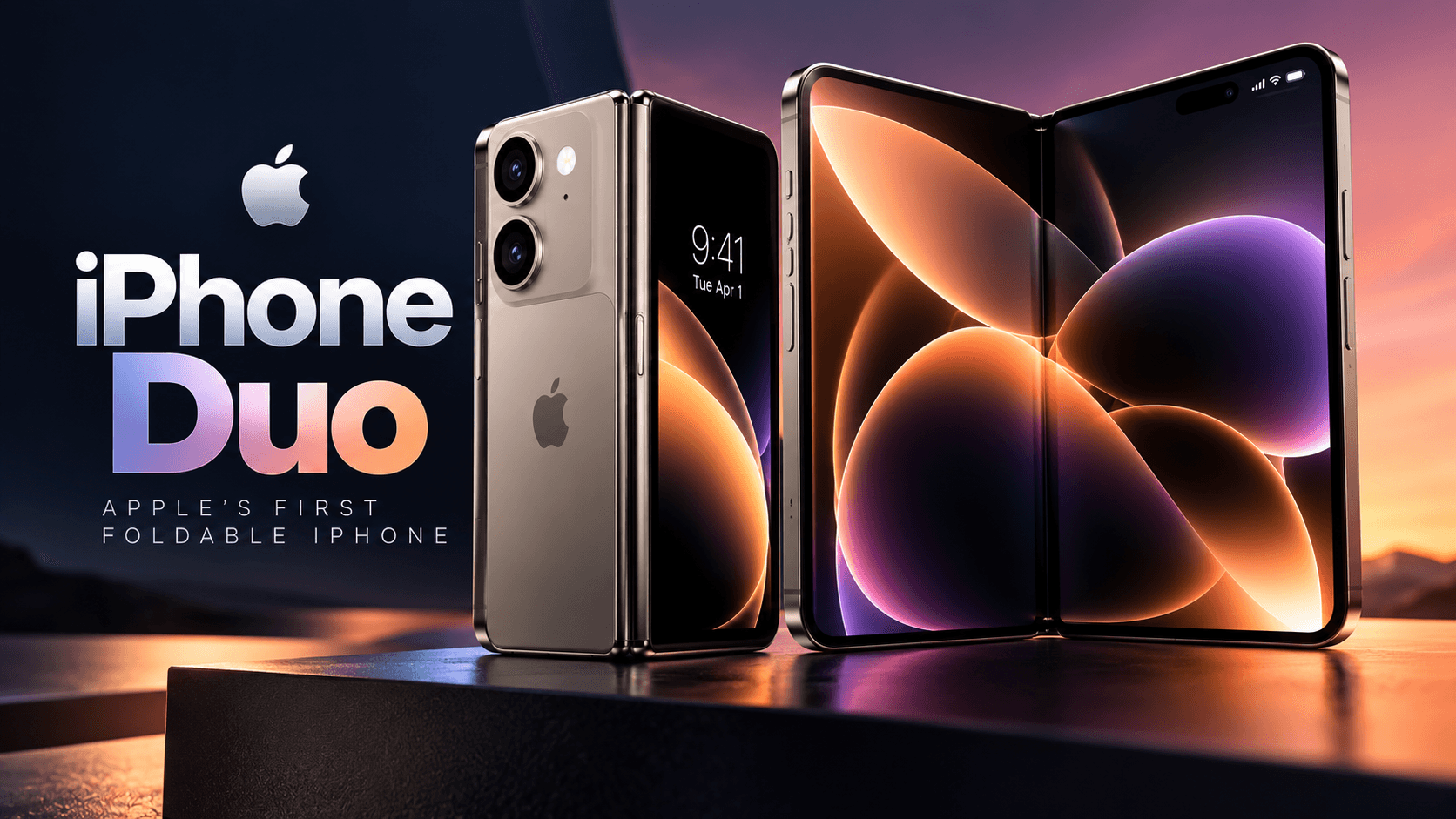
After years of speculation around a foldable iPhone, Apple has officially unveiled the iPhone Duo, its first foldable iPhone and one of the biggest changes to the iPhone lineup in years.
Unlike a conventional smartphone, the iPhone Duo is designed to work as both a compact phone and a much larger tablet-like device. Open it up and you get a 7.6-inch display. Fold it closed and you have a 5.4-inch outer display.
But this isn't simply Apple putting a folding screen on an iPhone.
The company has redesigned the hardware, cameras, software and even the way users interact with the device around its foldable form factor.
And with a starting price of $1,999, the iPhone Duo is also the most expensive iPhone Apple has ever introduced.
So what exactly are you getting for that money?
A Completely New iPhone Design
The iPhone Duo uses a book-style folding design rather than the clamshell approach used by phones such as the Galaxy Z Flip.
When opened, the device measures just 5.2mm thick, making it surprisingly thin for a phone that contains two displays, two battery cells and a sophisticated hinge mechanism.
Folded, it measures 11.3mm thick.
The phone weighs 254 grams, placing it firmly in flagship territory while still being designed to remain portable.
Apple uses a Grade 5 titanium frame, Ceramic Shield materials and a redesigned hinge system containing more than 100 components.
The company has also given the Duo an IP68 rating, meaning it has the same level of dust and water resistance expected from Apple's high-end iPhones.
Apple is offering the iPhone Duo in two finishes:
Star White
Night Sky
The overall design is unmistakably iPhone, but the folding mechanism makes it fundamentally different from anything Apple has shipped before.
Two Displays Instead of One
The biggest reason to buy the iPhone Duo is obviously its displays.
The internal screen measures 7.6 inches, giving the Duo significantly more screen real estate than a conventional iPhone.
Apple says the internal display is 50% larger than the iPhone 18 Pro Max.
When closed, the external display measures 5.4 inches and allows the phone to function normally without having to unfold it.
Both displays support:
ProMotion up to 120Hz
Always-On display
Up to 3,000 nits outdoor peak brightness
Apple's latest display technology
Nano-texture technology designed to reduce reflections and make the crease less noticeable
That last part is particularly interesting.
Foldable phones have traditionally had to deal with visible creases and reflections across their flexible displays. Apple is using a nano-texture finish to reduce both issues.
Whether this makes the crease effectively disappear in real-world use is something that will need proper hands-on testing.
The Bigger Screen Changes How You Use the iPhone
Apple isn't treating the 7.6-inch display as simply a larger version of iOS.
iOS 27 has been adapted specifically for the Duo.
Users can place apps side by side using Split View, run two windows from the same app and save frequently used app combinations.
For example, you could have Safari open beside Notes, or Messages beside Calendar.
Apple is also introducing the ability to save app pairs so frequently used combinations can be launched together.
This makes the iPhone Duo feel closer to a small tablet when unfolded.
The company has also redesigned parts of the Home Screen and Dynamic Island experience around the two-screen form factor.
For users who spend a lot of time reading, editing documents, managing social media or multitasking, this could be one of the biggest advantages of the Duo.
Apple Pencil Support Is Coming
The iPhone Duo also supports the Apple Pencil with USB-C, although Apple says this feature is coming later in 2026.
That changes the potential audience for the device.
The large internal screen could make the Duo useful for quick sketches, handwritten notes, annotations and other creative workflows.
It isn't positioned as an iPad replacement, but Apple is clearly trying to blur the line between a smartphone and a small tablet.
Apple Chose a Different Camera Strategy
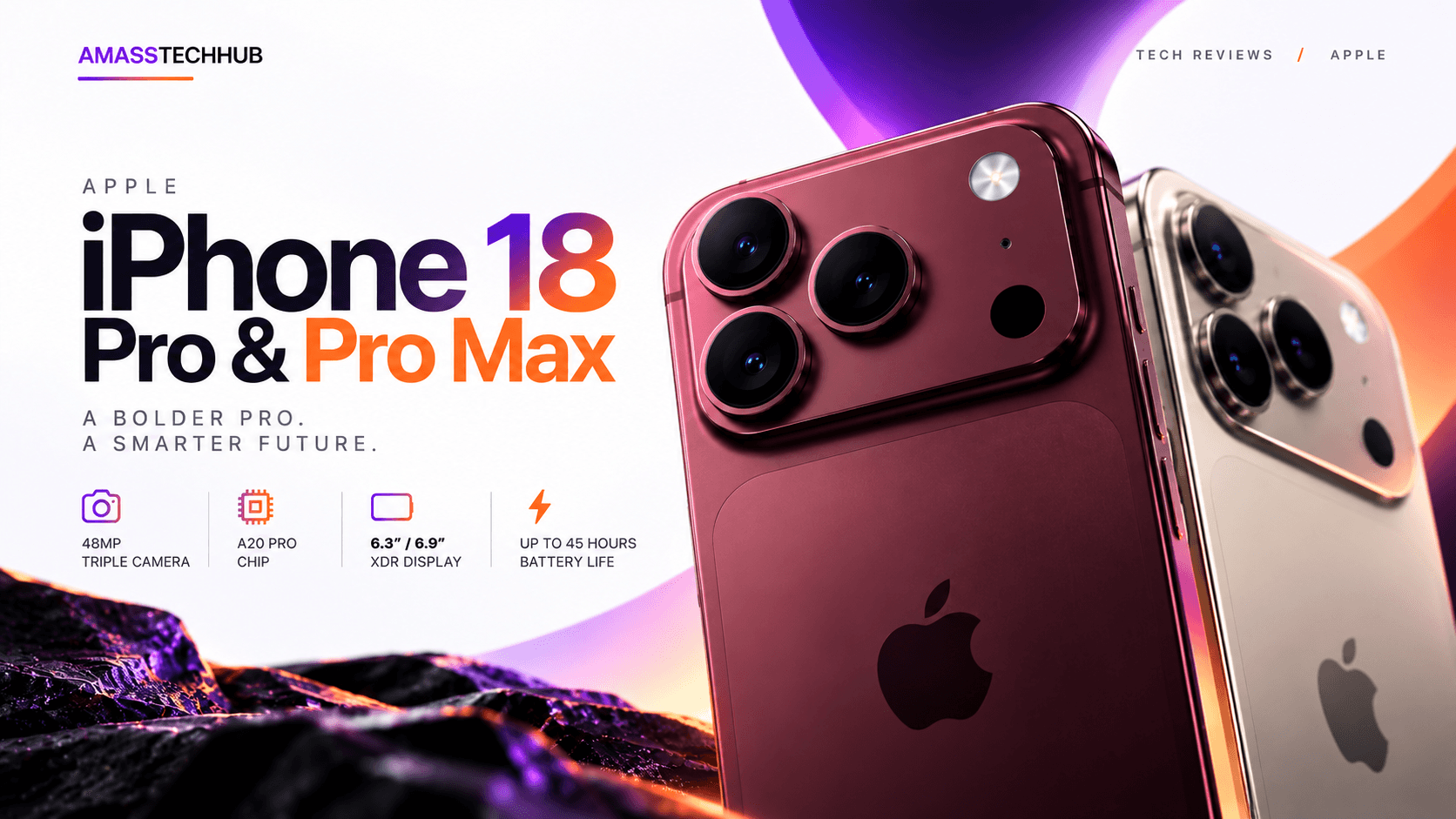
The iPhone Duo doesn't use the same triple-camera setup found on the Pro Max.
Instead, it has a dual-camera system consisting of:
48MP Fusion Main
48MP Fusion Ultra Wide
The main camera provides optical-quality 2x telephoto capability, while the ultra-wide camera supports macro photography.
Apple has also built several camera features specifically around the foldable design.
One of the most interesting is Duo Preview.
The large internal screen can be used to preview what the camera is capturing, creating new possibilities when shooting with another person.
There is also Smart Take, which uses the Duo's form factor to create new ways of framing and capturing photos.
This Could Be a Serious Video-Creator Phone
Apple is also pushing the Duo heavily toward creators.
The main camera can record 4K video at 120fps with Dolby Vision, giving the phone serious slow-motion and cinematic recording capabilities.
The device also supports:
Cinematic effects after recording
Audio Mix
Dolby Vision HDR time-lapse
Camera Control
Siri Camera mode
Center Stage front camera
The foldable design could also make hands-free recording more practical.
You can partially fold the device and position it on a surface without necessarily needing a traditional phone stand.
For creators who regularly shoot themselves, record demonstrations or produce social media content, this could become one of the more interesting aspects of the Duo.
However, actual camera quality will ultimately depend on real-world testing.
Specifications can tell us what the cameras are capable of, but they don't automatically determine image quality.
The Front Camera Is Different Too
Apple has placed a Center Stage front camera inside the Duo and uses an under-display camera for FaceTime on the internal screen.
The larger display also allows for a more immersive FaceTime experience when the phone is opened.
Apple has introduced features such as Duo FaceTime and Kid Cue, taking advantage of the larger screen and foldable design.
Again, these are features that simply aren't possible in the same way on a traditional slab smartphone.
A20 Pro Powers the Duo
Inside the iPhone Duo is Apple's A20 Pro chip, the same generation of processor used in the iPhone 18 Pro lineup.
Apple says the chip delivers up to 35% better sustained performance than the previous-generation A17 Pro.
The A20 Pro features:
6-core CPU
7-core GPU
Dual 16-core Neural Engine
2nm manufacturing technology
50% more unified memory bandwidth
Because foldables have more hardware packed into a relatively thin body, sustained performance and thermal management are particularly important.
Apple has therefore incorporated a vapor chamber cooling system into the Duo.
That should help the device maintain performance during demanding tasks such as gaming, video editing and AI processing.
Battery Life Is Surprisingly Ambitious
Battery life is another area where Apple is making a big claim.
The Duo uses a dual-battery architecture because of its folding design.
Apple rates the device for up to:
31 hours of video playback on the internal display
44 hours of video playback on the outer display
Up to 24 hours of general use when both displays are used equally
Charging is also faster than previous iPhones.
Apple says the Duo can reach 50% charge in around 20 minutes using a wired 60W-or-higher adapter.
Wireless charging can reach 50% in approximately 30 minutes using MagSafe or Qi2.
As always, these are Apple's testing figures. Real-world battery life will depend heavily on brightness, network conditions, apps and how frequently users switch between the two displays.
Touch ID Returns to the iPhone
One of the more surprising decisions is Apple's choice to bring Touch ID back.
Instead of Face ID, the iPhone Duo uses Touch ID integrated into the side button.
Apple Watch unlock is also supported.
This makes sense from a hardware perspective because the foldable form factor leaves less room for the traditional Face ID system.
It also gives users a familiar biometric authentication method while keeping the bezels around the displays extremely thin.
Apple Intelligence Is Built Into the Experience
The iPhone Duo runs iOS 27 and includes Apple's latest Apple Intelligence features.
Siri gains improved capabilities including:
Personal context
Onscreen awareness
Deeper app integration
More natural interactions
Apple is also continuing its hybrid approach to AI, processing tasks on-device when possible and using Private Cloud Compute for more demanding requests.
The larger display could make AI features more useful because users have more space to see generated information, interact with apps and work across multiple windows.
The Hinge Is One of the Most Important Parts
A foldable phone lives or dies by its hinge.
Apple says the Duo's hinge contains more than 100 components and uses internal supports and ceramic fiber inserts.
The goal is to make the hinge strong enough to survive repeated folding while keeping the phone extremely thin.
Apple has also worked to make the internal display more resistant to the problems traditionally associated with foldable screens.
But this is one area where specifications aren't enough.
Durability will only become clear after the phone has been used extensively by consumers and subjected to long-term testing.
The Price Is Going to Be the Biggest Conversation
The iPhone Duo starts at $1,999.
The base model comes with 256GB of storage, while higher-capacity configurations are available at:
256GB
512GB
1TB
2TB
That puts the Duo well above the starting price of Apple's conventional flagship iPhones.
And this is where the decision becomes more complicated.
You're not simply paying for better specifications.
You're paying for an entirely different form factor.
The question is whether the ability to turn your iPhone into a much larger screen is worth paying almost twice the price of a conventional flagship smartphone.
iPhone Duo vs iPhone 18 Pro Max
The iPhone 18 Pro Max remains the conventional flagship choice.
It offers a large display, a more familiar design and Apple's Pro camera system without the complexity of a folding mechanism.
The Duo, on the other hand, gives you something fundamentally different.
iPhone 18 Pro Max:
Traditional smartphone design
Larger conventional display
Triple-camera Pro system
Lighter and simpler form factor
Lower starting price
iPhone Duo:
7.6-inch foldable internal display
5.4-inch external display
Dual 48MP camera system
Foldable multitasking experience
Apple Pencil support
Touch ID
Much higher starting price
Neither device is simply a replacement for the other.
The Duo is aimed at people who specifically want the flexibility of a foldable device.
Who Is the iPhone Duo Actually For?
The iPhone Duo makes the most sense for people who want to combine several devices or workflows into one.
For example, someone who frequently:
Multitasks between apps
Reads documents
Watches videos
Edits content
Takes notes
Uses their phone for productivity
Creates social media content
Wants a larger screen without carrying an iPad
could get significant value from the form factor.
But someone who primarily wants a great camera, excellent battery life and a powerful iPhone may not necessarily need a foldable.
The Duo isn't designed to make every iPhone user upgrade.
It is designed to create an entirely new category within Apple's ecosystem.
The Bigger Question: Can Apple Make Foldables Mainstream?
Apple entering the foldable market is significant because the company rarely enters a hardware category simply to participate.
The iPhone Duo gives Apple an opportunity to redefine what an iPhone can be.
But it also introduces new questions.
How durable will the display be after years of folding?
How noticeable will the crease become?
How comfortable will the 254-gram weight feel in everyday use?
Will the hinge remain tight after thousands of folds?
And most importantly, will users feel that the larger display is worth the additional cost?
Those questions cannot be answered from Apple's launch specifications alone.
Final Thoughts
The iPhone Duo is arguably the biggest change to the iPhone formula since Apple introduced the iPhone X.
It combines a traditional smartphone experience with a much larger tablet-like display, while bringing Apple's latest A20 Pro processor, iOS 27, Apple Intelligence, advanced cameras and a completely redesigned physical architecture.
The $1,999 starting price makes it a premium product, but that price also reflects what Apple is trying to accomplish: not simply another iPhone, but a device that can adapt between two different form factors.
The iPhone Duo will be available for pre-order on October 16, 2026, with availability beginning October 23 in the first wave of markets.
Until then, this should be viewed as a first look and launch deep dive rather than a full hands-on review.
The real test begins when people actually start folding it, carrying it, shooting with it, multitasking on it and using it every day.
Apple has finally entered the foldable-phone era.
Now we get to see whether the iPhone Duo can make that era feel worth $1,999.
Newsletter
Enjoying this article?
Get the best African tech stories delivered weekly. No spam.

Written by
Theophilus AmankwahI've always wanted to be part of Technology, the options were either I watch it happen or be part of it and so I couldn't settle for less!
What did you think of this article?