

- The numbers at a glance
- Optimus: early production, bumpy ramp
- Robotaxis and self-driving: later than hoped
- The energy business cooled
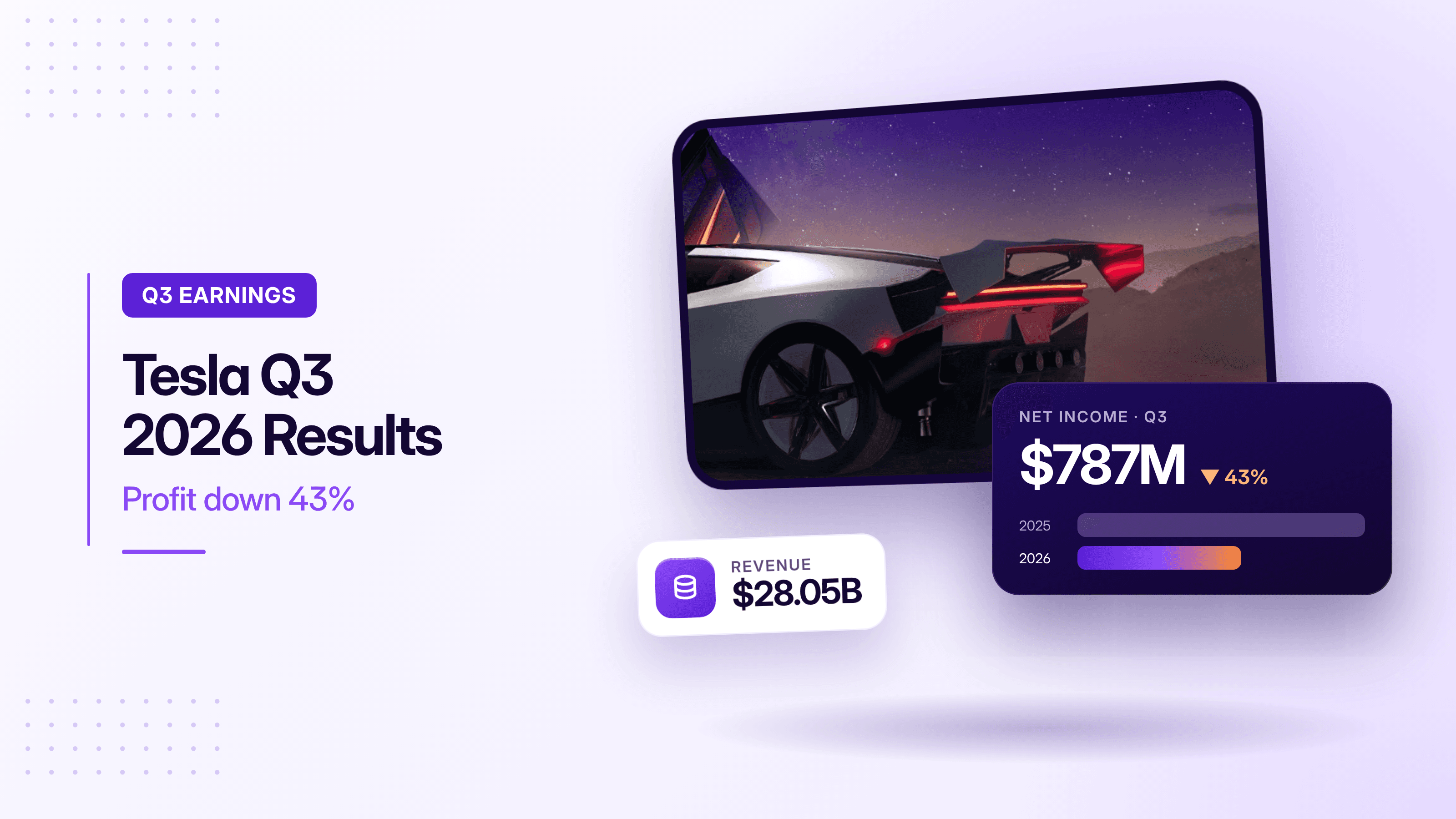
Tesla's third-quarter results, released on 21 October 2026, tell the story of a company paying heavily today for a future it hopes looks very different. Sales barely moved, but profit fell sharply as spending on robots, self-driving taxis and artificial intelligence surged.
The numbers at a glance
• Revenue: $28.05 billion, flat year on year and in line with analyst expectations.
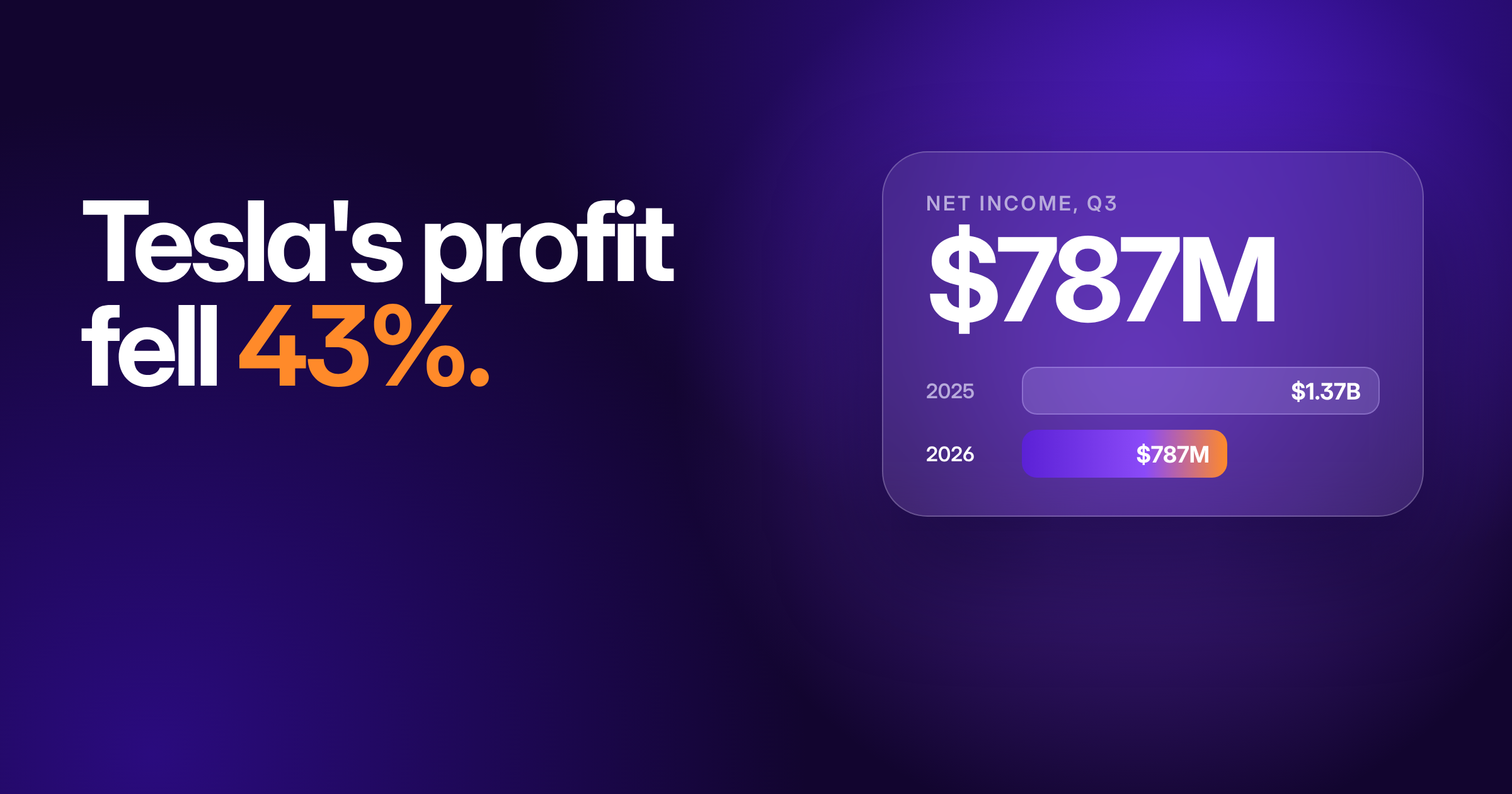
• Net income (GAAP): $787 million, down 43% from $1.37 billion a year earlier.
• Operating income: $718 million, down 56%, with operating margin shrinking to 2.6% from 5.8%.
• Adjusted earnings per share: $0.48, ahead of the $0.45 analysts expected but below last year's $0.50.
• Research and development: $2.76 billion, up 69%.
• Free cash flow: $1.53 billion, down from $3.99 billion.
Where the money went
The headline drop isn't about Tesla selling fewer cars. Gross margin actually improved to 19.6% from 18.0% a year ago. The pressure came from operating expenses, which jumped 39% to $4.78 billion. Most of that increase is research and development tied to Tesla's Optimus humanoid robot, the Cybercab robotaxi and what the company calls its “Super Intelligence” work.
Capital spending also more than doubled to $4.73 billion for the quarter. Even so, Tesla has spent about $13 billion so far this year, well short of its guidance of more than $25 billion for the full year, which means a heavy final quarter of spending is still ahead.
Optimus: early production, bumpy ramp
The most notable update is that Tesla has started building Optimus robots on high-volume production lines in Fremont, California. The company described them as its first production-quality robots. Elon Musk was careful with expectations, calling it “early production” and warning that the ramp would be “somewhat bumpy.”
Reaching a rate of 20,000 robots a week is likely at least a year away, and Tesla expects to start delivering Optimus to outside companies around the end of next year, once remaining design issues, mainly in the robot's hands, are solved.
Robotaxis and self-driving: later than hoped
Cybercab has joined Tesla's own robotaxi fleet in Austin, and rides are expected to launch in Dallas next month. Tesla aims to get Cybercabs to customers by the end of 2026 on a small scale, but robotaxis aren't expected to show up meaningfully in its financial results until the second quarter of 2027.
Unsupervised Full Self-Driving for customer cars has also slipped to around the second quarter of 2027. In April, Musk had pointed to the fourth quarter of 2026.
The energy business cooled
Tesla's energy generation and storage revenue fell 16% to $2.88 billion. Deployments grew 10% to 13.7 GWh, but that was below the roughly 15.9 GWh analysts had expected.
How the market reacted
Investors weren't impressed. Tesla shares closed about 3% lower on 22 October, on a day when the wider tech sector also sold off amid renewed worries about AI spending.
The bottom line
Tesla is asking investors to fund a pivot from carmaker to robotics and AI company, and this quarter shows the cost of that bet. The car business is holding steady, but the returns from Optimus and robotaxis are still a year or more away. How long the market stays patient may be the biggest question for Tesla in 2027.
Sources
Electrek: Tesla Q3 2026 financial results
The Next Web: Tesla's profit falls 43% as it starts building Optimus robots
Yahoo Finance: Stock market today, 22 October 2026
Newsletter
Enjoying this article?
Get the best African tech stories delivered weekly. No spam.
Written by
Theophilus AmankwahI've always wanted to be part of Technology, the options were either I watch it happen or be part of it and so I couldn't settle for less!
What did you think of this article?