
Microsoft 365 Outage Hits Outlook and Teams in 74 Countries
Email, meetings and shared files stopped working for millions of Microsoft customers from Thursday evening. We explain what went wrong, who was hit and what to do while services recover.


If your work email refused to load on Thursday evening, you were not alone. A major Microsoft 365 outage knocked out Outlook, Teams, Copilot, SharePoint and other workplace apps for millions of people, and by Friday afternoon (GMT) the company was still working to bring everything fully back online. Banks, government offices, courts and hospitals across dozens of countries had to fall back on phone calls and, in some cases, paper. Here's what happened, who was affected and what you should do while things recover.
What happened
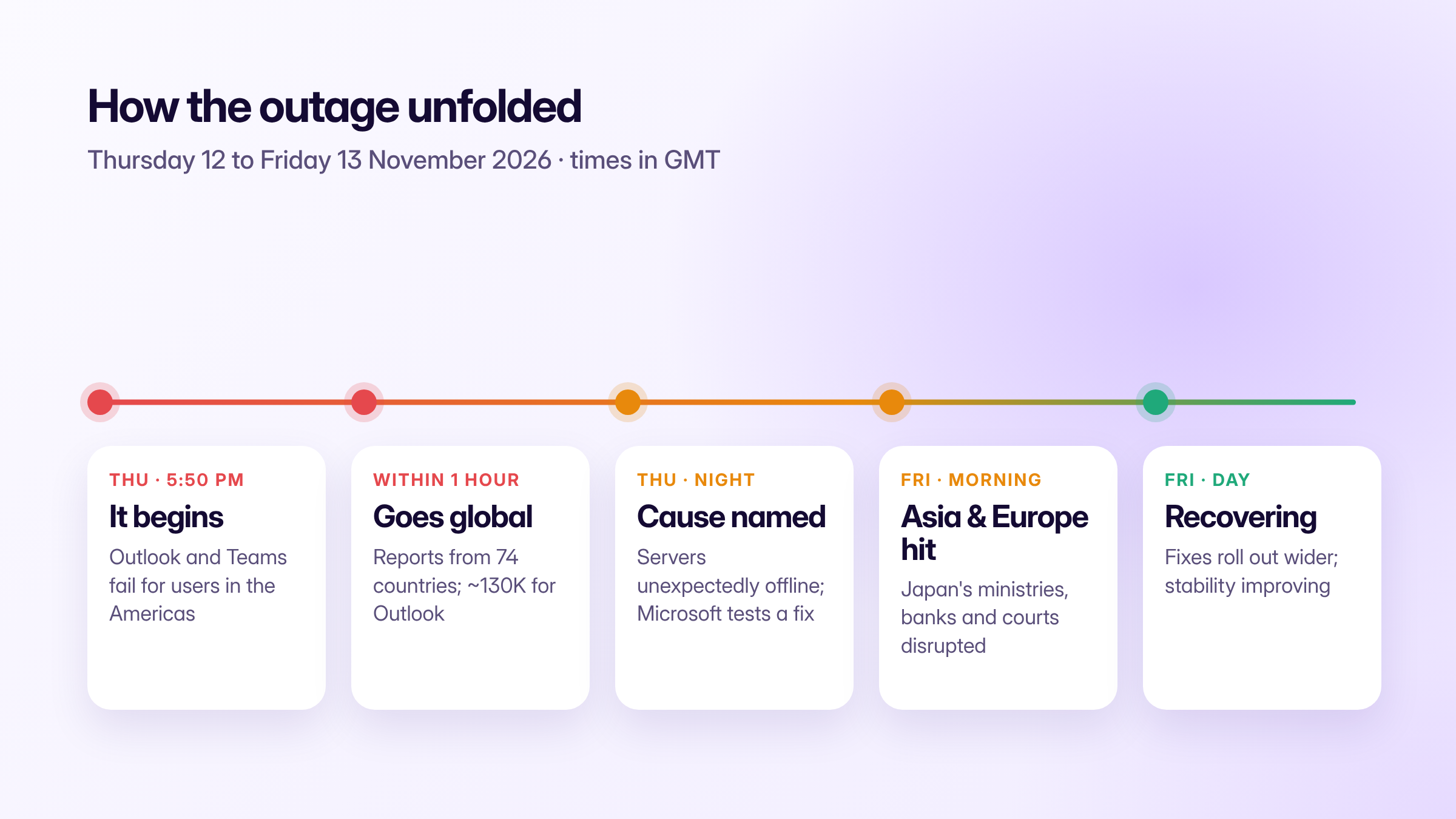
Problems started just before 1 p.m. US Eastern Time on Thursday, 12 November (about 5:50 PM in Ghana). Microsoft first reported trouble with Exchange Online mailboxes and Teams in the Americas, but the issue spread quickly. Within roughly an hour, outage tracker Downdetector was receiving reports from 74 countries and territories, and close to 130,000 people had reported problems with Outlook alone.
As the working day began in Asia, Europe and Australia, a fresh wave of reports followed. More than 12 hours after it started, the outage was still not fully fixed. On Friday morning Microsoft said it was seeing early stabilisation and capacity improvements and was rolling its fixes out more widely.
Which services were affected
Microsoft's status page listed a long set of services that could be affected, which is why it felt like everything stopped at once:
- Outlook and Exchange Online (email and calendars, on web and desktop)
- Microsoft Teams (chat, calls and meetings)
- SharePoint Online and OneDrive (shared files)
- Microsoft 365 Copilot (the AI assistant)
- Planner, To Do, Intune, Defender XDR and Defender for Office 365
Apps and services that connect to Microsoft accounts were also hit. OpenAI said some of its tools misbehaved because of their links to Microsoft services.
What caused it
Microsoft says a number of its servers became unexpectedly unavailable, which pushed too much load onto the remaining infrastructure. It stressed that the load was not caused by a spike in traffic, and that there is no sign of a cyberattack. Charles Lamanna, the Microsoft executive vice president responsible for Copilot and the platform, apologised for the disruption late on Thursday and said there was no indication of malicious activity.
To restore service, Microsoft tested a fix to bring the affected servers back, rerouted traffic and rolled out an alternative way of running the checks that had taken those servers offline. A full technical explanation is expected once the incident is closed.
Who was hit
Because so many organisations run email, meetings and documents on Microsoft 365, the effects showed up far beyond offices:
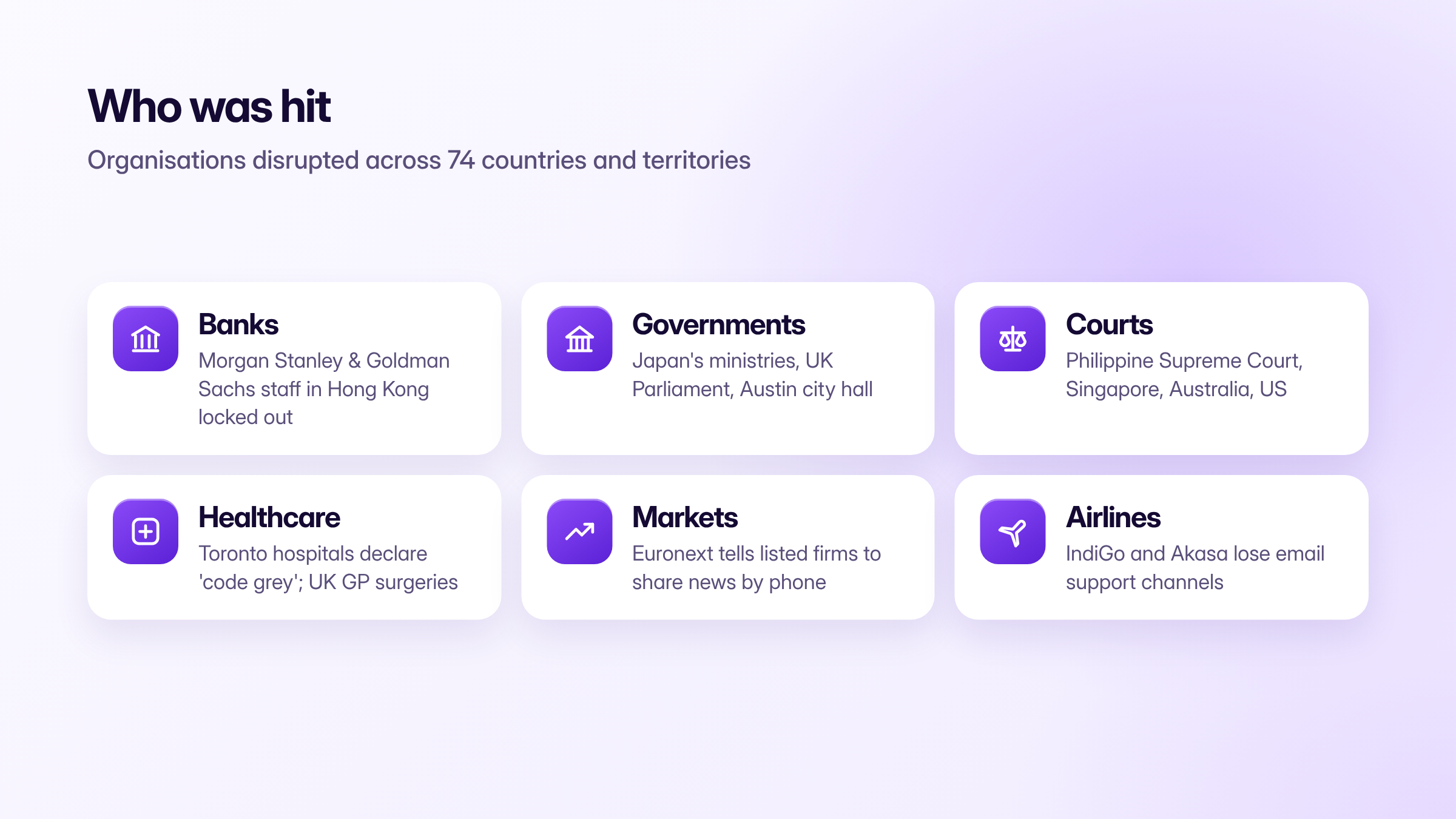
- Banks: staff at Morgan Stanley and Goldman Sachs in Hong Kong were locked out of email and Teams, and banks including Standard Chartered warned customers about fake tech-support scams.
- Governments: Japan's ministries struggled to send email during Friday's working day, UK MPs lost access to Microsoft tools, and city governments such as Austin, Texas asked residents to phone instead.
- Courts: the Philippine Supreme Court and courts in Singapore, Australia and the US warned of delays.
- Healthcare: Unity Health Toronto declared a 'code grey' for an infrastructure failure, though patient care continued, and some UK GP surgeries asked patients not to message online.
- Markets and business: Euronext told listed companies to share information by phone, and truck maker Workhorse postponed its earnings release.
What you should do
If you use Outlook or Teams for school, work or business, a few simple steps will keep you safe and productive while Microsoft finishes the recovery:
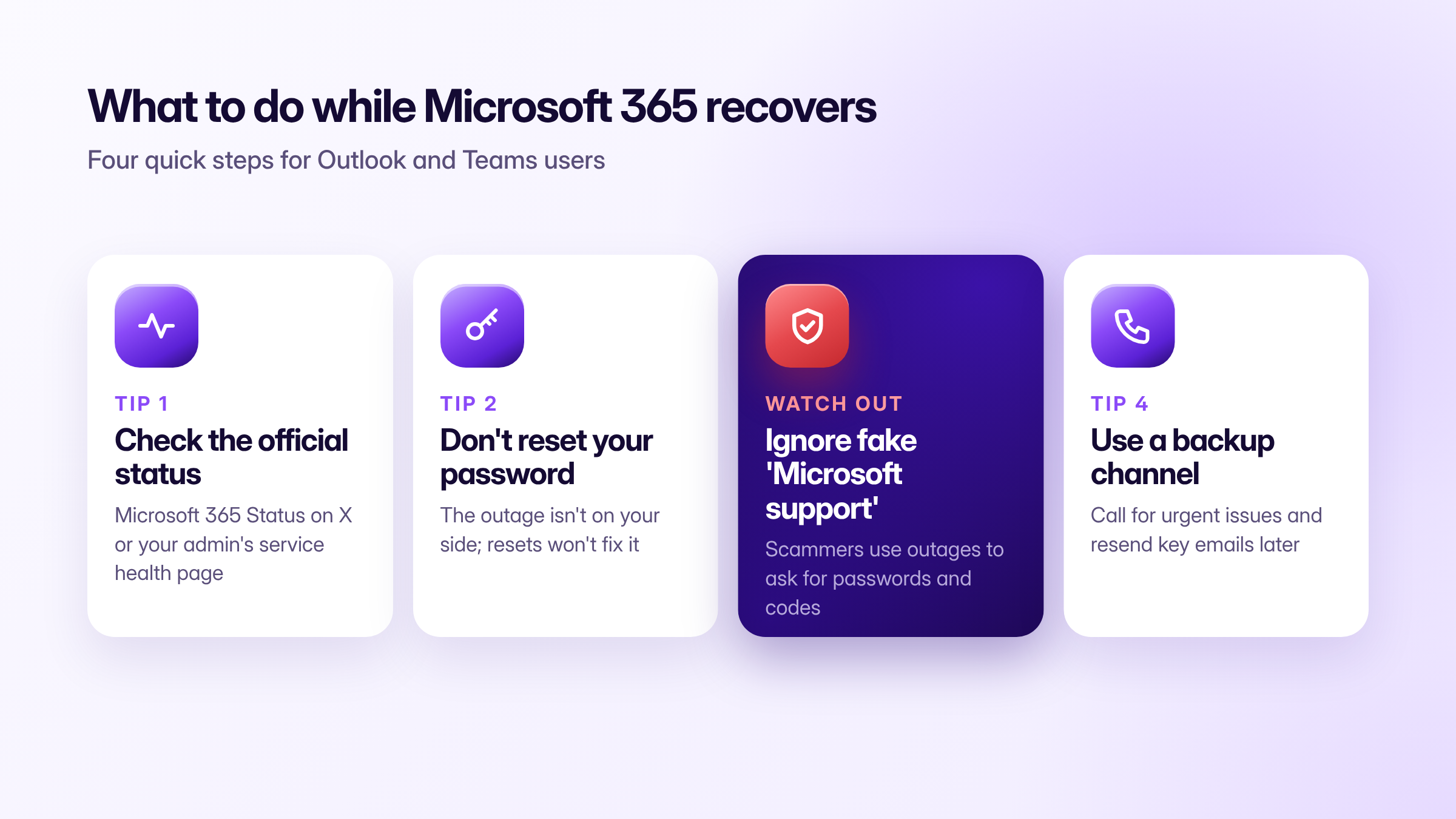
- Check the official Microsoft 365 Status account on X or your organisation's service health page before assuming the problem is on your side.
- Don't reset your password or reinstall Office because of the outage. It won't help, and it can lock you out later.
- Be careful of anyone calling, texting or emailing as "Microsoft support". Scammers use big outages to ask for passwords and codes.
- Move urgent conversations to another channel, like a phone call, and resend important emails once service returns, as some messages may arrive late.
The bottom line
This outage is a reminder of how much daily work now depends on a few cloud providers. One failure inside Microsoft stopped email, meetings and files for banks, courts and governments at the same time. For businesses and schools, it's worth agreeing on a backup plan now, such as a phone tree or a WhatsApp group for urgent updates, so the next outage is an inconvenience rather than a shutdown. We'll update this story when Microsoft confirms full recovery and publishes its root-cause report.
Theophilus Amankwah
I've always wanted to be part of Technology, the options were either I watch it happen or be part of it and so I couldn't settle for less!
More from Theophilus →Spotted an error? Report a correction · Our editorial standards
What did you think of this article?

Comments (0)