
Naira to Dollar Exchange Rate Today, Tuesday, November 24, 2026
The Naira faces renewed pressure against the US dollar on Tuesday, November 24, 2026. The official exchange rate stands at ₦1,394.01, while the parallel market quotes approximately ₦1,472 per dollar. Here's the latest exchange-rate breakdown, dollar conversions and economic factors influencing the Nigerian currency.

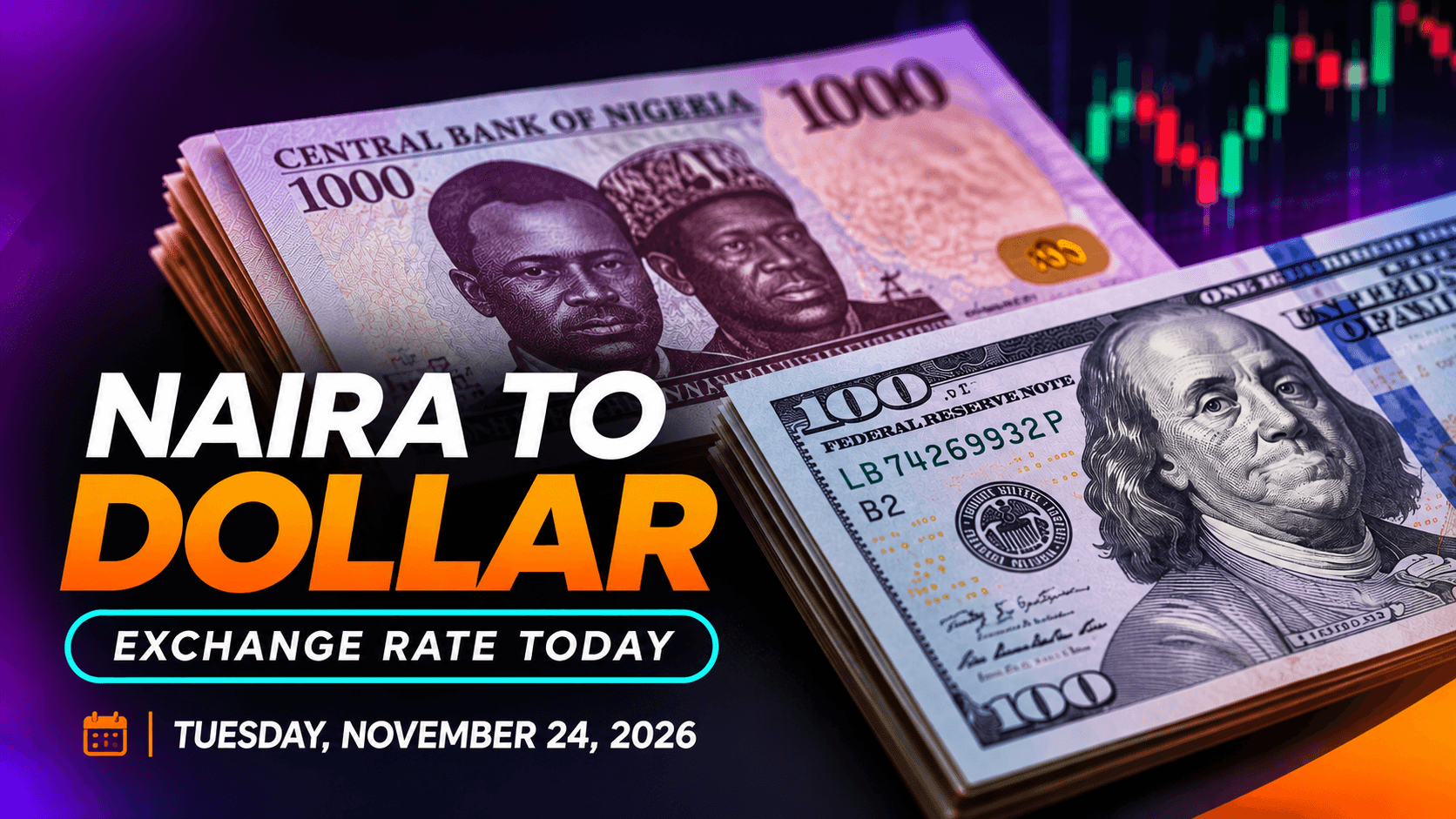
The Nigerian naira is facing renewed pressure against the United States dollar as the foreign exchange market opens on Tuesday, November 24, 2026. The latest figures show a difference between the official exchange rate and parallel-market quotations, highlighting the challenges facing individuals and businesses that depend on foreign currency.
As Nigeria approaches the end of the year, demand for dollars remains an important factor influencing the country's foreign exchange market. Importers, international students, travellers, online businesses and companies making overseas payments are closely monitoring movements in the naira.
Here is a breakdown of the latest dollar-to-naira exchange rates, what they mean for Nigerians and the economic developments influencing the market.
Dollar to Naira Exchange Rate Today – November 24, 2026
As of Tuesday morning, the official and parallel markets are reporting different exchange rates.
According to the available market data, the following rates apply:
Official Market (CBN/NFEM)
Dollar buying rate: ₦1,393.01
Dollar selling rate: ₦1,394.01
Parallel Market (Black Market)
Dollar buying rate: ₦1,457
Dollar selling rate: ₦1,472
The parallel-market figures reflect a 9:00 AM WAT benchmark published by ForexNaira. Actual rates may differ depending on the dealer, location, transaction size and availability of physical dollars.
The official rate is based on the Nigerian Foreign Exchange Market (NFEM), while the parallel-market rate reflects quotations from independent currency dealers.
How Much Is $1, $10, $50, $100 and $1,000 in Naira Today?
For Nigerians who want to convert dollars into naira or purchase foreign currency, understanding the conversion amounts is important.
Using the published official selling rate of ₦1,394.01 and the parallel-market selling benchmark of ₦1,472, the estimated conversions are:
US DollarsOfficial RateParallel Market$1₦1,394.01₦1,472$5₦6,970.05₦7,360$10₦13,940.10₦14,720$20₦27,880.20₦29,440$50₦69,700.50₦73,600$100₦139,401₦147,200$200₦278,802₦294,400$500₦697,005₦736,000$1,000₦1,394,010₦1,472,000
These figures use the quoted selling rates, meaning the estimated amount required to purchase dollars. Actual transactions may involve additional charges or different exchange rates.
Why Are the Official and Black Market Dollar Rates Different?
One of the most frequently asked questions about Nigeria's foreign exchange market is why the dollar has different prices depending on where someone exchanges it.
The difference largely comes down to how foreign currency is supplied, distributed and traded.
- The Official Foreign Exchange Market
The official market operates through the Nigerian Foreign Exchange Market framework, where authorised financial institutions and other eligible participants conduct foreign exchange transactions.
The Central Bank of Nigeria oversees the regulatory framework and publishes official market data.
Commercial banks and authorised financial institutions use applicable market rates when processing foreign currency transactions. However, the actual rate offered to a customer may differ depending on the bank, transaction type and associated charges.
- The Parallel Market
The parallel market, commonly called the black market, operates outside the official exchange-rate quotation system.
Its rates are influenced by demand and supply, the availability of physical dollar notes, dealer pricing and local market conditions.
When demand for dollars exceeds the available supply through preferred channels, buyers may be willing to pay more to obtain foreign currency.
This explains why the parallel-market selling rate can be higher than the official market rate.
It is also important to understand that the parallel market does not have one universally fixed rate. Quotations can vary between Lagos, Abuja, Kano, Port Harcourt and other locations.
What Is Putting Pressure on the Nigerian Naira?
Several economic developments are contributing to the current foreign exchange situation.
- Declining External Reserves
Nigeria's external reserves are an important part of the country's ability to manage foreign exchange pressures.
According to figures reported from the Central Bank of Nigeria, the country's external reserves declined to approximately $54.58 billion as of November 20, 2026.
This represented a reduction of about $680 million, or 1.23 per cent, over the reported period.
Foreign reserves help the country meet international obligations and provide support for foreign exchange market interventions.
A sustained decline can raise concerns among investors about the country's ability to manage currency-market pressures.
However, Nigeria's reserves remained above the corresponding level recorded in 2025.
- Increased Demand for Foreign Currency
Nigeria depends on foreign exchange for several economic activities, including the importation of machinery, petroleum-related products, raw materials, technology equipment and consumer goods.
Individuals also require dollars for international education, travel, subscriptions, medical expenses and overseas transactions.
As the festive season approaches, increased demand for imported goods and international payments could add further pressure to the foreign exchange market.
- Foreign Investor Confidence
Foreign portfolio investors play an important role in Nigeria's financial markets.
When investors are confident about economic stability and returns, they may be more willing to bring foreign currency into the country.
However, uncertainty surrounding exchange-rate movements, monetary policy and investment returns can influence their decisions.
A reduction in foreign currency inflows, combined with strong demand, can increase pressure on the naira.
CBN Monetary Policy Meeting: Why Investors Are Watching November 24
Another major development attracting attention is the Central Bank of Nigeria's 308th Monetary Policy Committee meeting, scheduled for November 23 and 24, 2026.
The committee is expected to review the country's economic conditions, including inflation, exchange-rate movements, liquidity and interest rates.
At its previous meeting in September, the CBN reset the Monetary Policy Rate (MPR) from 26.5 per cent to 23 per cent.
The November meeting is particularly important because the naira has experienced renewed pressure while external reserves have declined.
Financial analysts have suggested that the CBN may need to exercise caution before making further interest-rate reductions.
Why does this matter?
Interest rates influence borrowing costs, investment decisions and the attractiveness of naira-denominated financial assets.
Higher interest rates can help support the attractiveness of local investments, although they can also make borrowing more expensive for businesses and individuals.
Lower interest rates may encourage economic activity and borrowing, but could also affect capital flows and currency stability.
The outcome of the November meeting will therefore be closely monitored by investors, businesses and financial institutions.
What Does the Dollar Exchange Rate Mean for Nigerians?
Changes in the dollar-to-naira exchange rate affect more than people who directly purchase foreign currency.
They can influence several areas of everyday life.
Importers and Business Owners
Businesses that import products, equipment and raw materials may face higher operating costs when the naira weakens.
These additional costs can eventually be reflected in the prices consumers pay for goods and services.
International Students
Nigerian students studying abroad may require dollars to pay tuition fees, accommodation expenses and other educational costs.
A higher exchange rate means they need more naira to meet the same dollar-denominated expenses.
Freelancers and Remote Workers
People earning in dollars may receive more naira when converting their earnings at a higher exchange rate.
However, the benefit depends on the rate available through their payment provider and the applicable conversion charges.
Travellers
Nigerians planning international trips may also be affected by exchange-rate movements, particularly when budgeting for accommodation, flights and other expenses abroad.
Will the Naira Strengthen or Weaken Further?
Predicting the exact direction of the naira is difficult because several factors influence its performance.
The outlook will depend on foreign exchange supply, external reserves, investor confidence, monetary policy decisions, oil-related inflows and the overall demand for dollars.
The CBN's ability to maintain stability in the official market will also be important.
A sustained improvement in foreign currency inflows and confidence in the economy could support the naira. On the other hand, persistent demand pressures and declining reserves could make currency stability more challenging.
For now, market participants will be watching the outcome of the November Monetary Policy Committee meeting and subsequent developments in the foreign exchange market.
Final Thoughts
The dollar-to-naira exchange rate remains one of the most important economic indicators for Nigerians, particularly businesses and individuals with international financial commitments.
As of Tuesday, November 24, 2026, the official selling reference stands at ₦1,394.01 per dollar, while the parallel-market selling benchmark is approximately ₦1,472.
Although the figures provide an indication of the current market situation, exchange rates can change throughout the day.
Anyone planning a foreign currency transaction should confirm the applicable rate directly with their bank or authorised financial service provider before proceeding.
Stay informed with AmassTechHub for daily technology, business and financial market updates.
Disclaimer: Exchange-rate figures in this report are indicative market quotations and are provided for informational purposes only. They are not guaranteed transaction prices or financial advice. Parallel-market rates are subject to variation.
Theophilus Amankwah
I've always wanted to be part of Technology, the options were either I watch it happen or be part of it and so I couldn't settle for less!
More from Theophilus →Spotted an error? Report a correction · Our editorial standards
What did you think of this article?

Comments (0)